
Hydrotope Capacity of Butyl Glycol: Behavior in the Presence of Alkalis and Electrolytes
Butyl glycol is a compound widely used in industry due to its high solvent power. This property is also evident in solutions containing alkalis. However, it is important to be aware of some unexpected reactions when using it in media with high electrolyte concentrations.
Keep reading to learn more.

Butyl glycol: characteristics and applications
Butyl glycol is a monobutyl ether of ethylene glycol. It is a colorless liquid with a sweet, rancid odor; it is miscible and soluble in water and alcohol, and has high solvent power for petroleum hydrocarbons. It consists of a glycol molecule bonded to four carbon atoms, as shown in the figure below:

It helps dissolve oily dirt and, most importantly, acts as a co-emulsifier to support the surfactant, promoting better surface wettability. In addition, glycols in general, because they have low surface tension, are capable of forming a “film” that masks stains.
Butyl glycol is a highly versatile chemical compound that is in great demand in industry due to its degreasing and solvent properties. It is used in a wide range of cleaning product formulations, from glass cleaners to industrial and automotive degreasers.

What is hydrotopia?
Hydrotopy is a solubility phenomenon in which the addition of a given amount of a second solute results in an increase in the aqueous solubility of another solute.
When we say that butyl glycol has high solvency power, it is precisely this hydrotopic property that we are referring to.
Increased solubility in the presence of alkalis
Alkali is defined as any hydroxide or oxide of the alkali metals (lithium, sodium, potassium, rubidium, and cesium). Caustic, on the other hand, is simply defined as that which “burns, causes cauterization, and disrupts skin tissue by carbonizing it.” Thus, caustic alkali is a term that combines both chemical properties, as exemplified by the well-known caustic soda or sodium hydroxide, whose corrosive nature stems from these properties.
In products such as alkaline degreasers, for example, alkalinity is a key factor in effectively removing contaminants such as grease, oils, and fats in general. Sodium hydroxide- and potassium hydroxide-based products are used in the degreasing process. Caustic potash, on the other hand, enhances the cleaning power of degreasers.
In general, butyl glycol can be used to increase the solubility of solutions containing alkalis.

As illustrated above, it is the oxygen and hydroxyl molecules in the polar portion that allow butyl glycol to dissolve in water. As a result, it forms a mixture through hydrogen bonding, which reduces polarity and, consequently, keeps the surfactant more stable.
High electrolyte concentration and a drop in the dew point
Despite its high solubility in the presence of alkalis, there are some concerns regarding the use of butyl glycol in media with high electrolyte concentrations.
If we use a highly caustic component, such as sodium hydroxide, and fill the medium with electrolytes, the compound will not be able to cope with the sudden increase in the medium’s polarity and will begin to dissociate, breaking the hydrogen and water bonds.
This will lower the cloud point, which is the temperature at which surfactants - especially nonionic ones - become insoluble, causing turbidity. If the product remains at or above this temperature for an extended period, separation tends to occur, resulting in two or more phases.
It can therefore be said that, in such cases, butyl glycol will begin to behave like an oil and, rather than acting as a hydrotope to increase the solubility of the surfactants, will impair the solubility of the system as a whole.
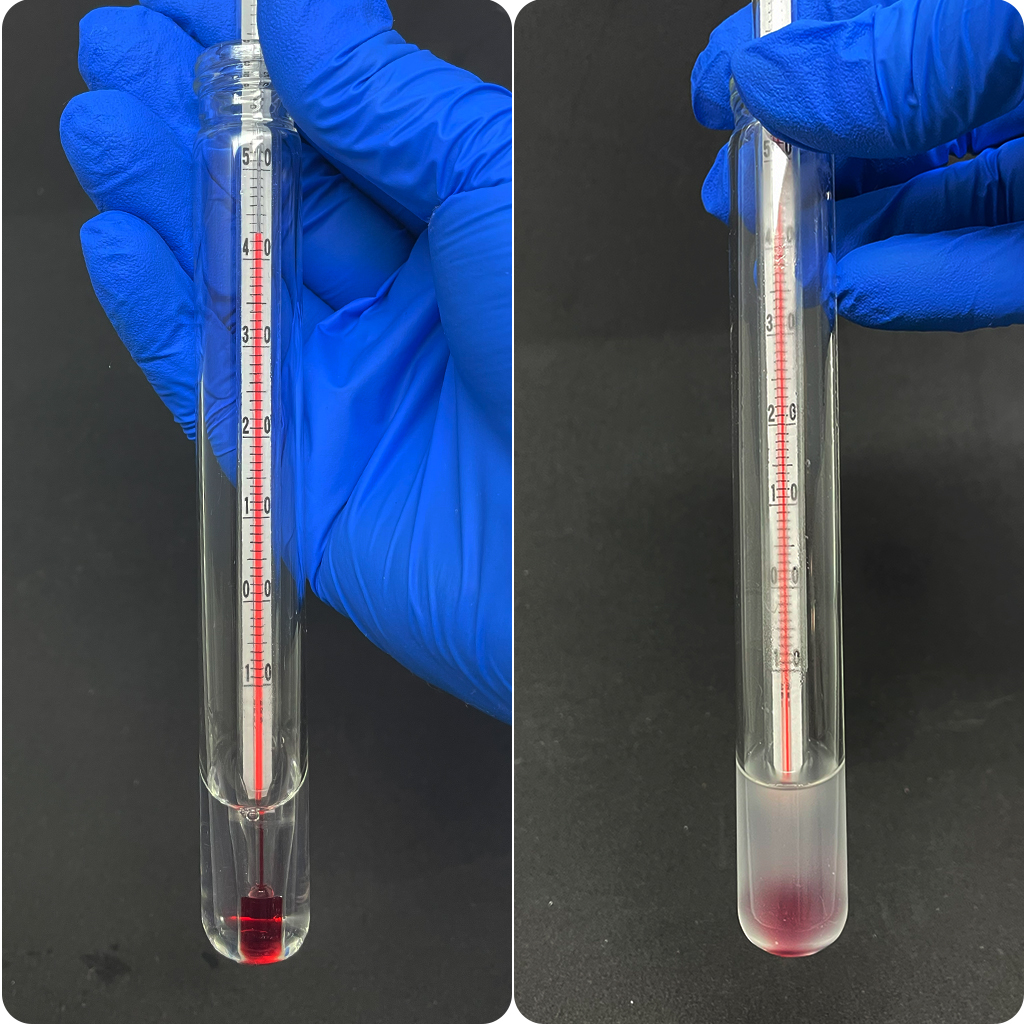
It is worth noting that the closer the product is to its fog point, the greater its cleaning power will be. Therefore, in formulations containing alkalis, it is necessary to pay attention to the amount of butyl glycol and electrolytes added, so as to achieve a cloud point of at least 50C—the minimum temperature that ensures the product’s integrity is maintained during storage and transport.
In some more specific technical products, where the application temperature at the time of use is known, formulating the product so that the cloud point is slightly below the application temperature contributes to maximum cleaning efficiency.
Options for Replacing Butyl Glycol in the Presence of Electrolytes
As we saw above, the use of butyl glycol in media with high electrolyte concentrations can lower the fog point and impair the solubility of the formulation as a whole.
In this regard, Macler offers highly efficient hydrotopes that guarantee excellent results at low dosages. See below for an example of some of these applied in a caustic industrial degreaser.

Click here to learn about some of Macler's solutions for replacing butyl glycol in your formulations.
Learn More
Understand what HLB is used for and how it helps you choose the ideal surfactant to create more stable emulsions.
The quality of the formulation depends on the raw materials, and minor variations can lead to losses. With this in mind, Macler developed TrustScan, a proprietary evaluation methodology. Through it, we ensure reliable and safe final products.
Isogen QUALI, a Macler solution developed as a technological alternative to simplify detergent formulations, acting as a single base capable of replacing multiple surfactants simultaneously.
Our chemistry
We use our labs to create
intelligent chemical solutions balanced with your reality.
Products
We use our R&D center, our own laboratory with experienced professionals, to deliver intelligent chemical solutions in balance with your reality.
