
Macler Says ‘No’ to Nonylphenol for a Cleaner Future
The company joined the Household Summit and advocated for replacing the compound due to its toxic potential, paving the way for a cleaner and safer future.

Macler, a company recognized for its commitment to innovation and its pursuit of more effective results for its customers, has taken another important step toward a cleaner and safer future. During the Household Summit, the company—which participated as a sponsor and speaker—advocated for the replacement of nonylphenol and announced that it would remove the product from its portfolio by the end of 2024.
Nonylphenol, a chemical compound widely used in various products, is known for its high toxicity and negative impact on the environment, as described in the article at this link. Macler, aware of the need to transform the industry, invites other companies to join this cause and adopt more sustainable and effective alternatives.
“There is a belief that it is not possible to replace Nonylphenol with solutions of similar cost. We have cases that show the opposite. By replacing Nonylphenol, companies not only contribute to the preservation of the planet, but also manage to improve performance and, in some cases, reduce costs,” says Lucas Micheluzzi, Technical Director of Macler.
During his presentation at the Household Summit, Lucas presented innovative and viable solutions for replacing Nonylphenol, proving that it is possible to reconcile results and environmental preservation.
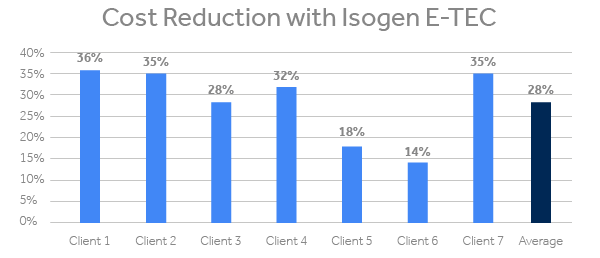
One solution worth highlighting is Isogen E-TEC, an emulsifier for fragrances in disinfectants, which has been shown to reduce formulation costs by up to 36%. Learn more by clicking this link.
 In addition to Isogen E-TEC, the company also presented success stories involving the replacement of nonylphenol with Berol 175 and Berol 260, both products from Nouryon, a multinational company for which Macler is the exclusive distributor in Brazil.
In the case of Berol 175, the solution was used in laundry detergent and chlorine-free bleach formulations, both of which showed improved performance; in the case of the bleach, there was a 6.5% reduction in costs.
Berol 260, on the other hand, was used in a degreaser formulation, resulting in a 10% reduction in the formula’s cost, a reduction in the cloud point from 38°C to >80°C, and a change in the product’s risk classification, moving from Risk II (Registered) to Risk I (Notified).

"Restrictions on the use of Nonylphenol are already spreading around the world; we can't just sit around waiting for a decree or legislation. Change needs to start now," argues Lucas.
Click here and contact Macler to replace Nonylphenol in your formulations.
Learn More
Understand what HLB is used for and how it helps you choose the ideal surfactant to create more stable emulsions.
The quality of the formulation depends on the raw materials, and minor variations can lead to losses. With this in mind, Macler developed TrustScan, a proprietary evaluation methodology. Through it, we ensure reliable and safe final products.
Isogen QUALI, a Macler solution developed as a technological alternative to simplify detergent formulations, acting as a single base capable of replacing multiple surfactants simultaneously.
Our chemistry
We use our labs to create
intelligent chemical solutions balanced with your reality.
Products
We use our R&D center, our own laboratory with experienced professionals, to deliver intelligent chemical solutions in balance with your reality.
