
Iris Hoffmann MaurilioCoordenadora de Marketing na Macler


When we think of cleaning products, foam is often the first sign that consumers associate with effectiveness. But does it really represent cleaning power?
The answer is: not always. Foam is more closely linked to the perception of performance than to its actual effectiveness, and understanding this is crucial for formulators seeking to develop competitive products.
From a technical point of view, foam is the dispersion of gas in a liquid, stabilized mainly by the action of surfactants. These molecules, present in most cleaning formulations, reduce the surface tension of water, allowing the formation of air bubbles.
Not all foam is the same. It can come in different forms, and its use can be explored according to the product's purpose and the user's expectations.
Several variables directly impact the presence of foam in a formulation:
Chemical structure of the chosen surfactants

Surfactants are primarily responsible for foam formation and stabilization. Their chemical structure, particularly the balance between the hydrophilic (affinity for water) and lipophilic (affinity for oils and fats) parts, determines not only the amount of foam generated but also its stability. Anionic surfactants are known for producing abundant and persistent foam, while non-ionic surfactants tend to generate less foam, making them ideal for applications excess foam is undesirable.
Addition of salts, electrolytes, or polymers

The presence of electrolytes in the formulation can significantly modify the stability of the foam. Some salts can increase the viscosity of the liquid phase surrounding the bubbles, delaying their rupture and extending the foam's lifespan. Conversely, high concentrations can destabilize and reduce the foam. Polymers can also act as stabilizers, reinforcing the lamellae, which are the "walls" that separate the air bubbles within the foam, like a liquid film formed by water and surfactant. Other additives function as antifoaming agents, breaking down the foam structure.
Water temperature during use

Temperature has a direct impact on the surface tension of water and the mobility of surfactants. At higher temperatures, surface tension decreases, facilitating the initial formation of foam, but stability may be compromised. At lower temperatures, foam tends to be more stable, but may form in smaller quantities due to the lower solubility of surfactants.
Water hardness level

Calcium and magnesium ions present in hard water interact with anionic surfactants, forming insoluble salts. This phenomenon reduces the effective concentration of available surfactant and, consequently, the amount of foam generated. Furthermore, the presence of these ions can alter the stability of the foam, making it more fragile and less durable. Therefore, the degree of water hardness is an important parameter for determining both cleaning performance and consumer sensory perception.
Mechanical agitation

Foam formation also depends on air interference, a process that occurs through mechanical agitation. Rubbing with a sponge, beating clothes in a washing machine, or even a high-pressure water jet are ways to incorporate air and promote foam generation. The greater the intensity of the agitation, the more bubbles are formed. However, very large bubbles tend to break easily, reducing stability.
These factors can enhance or reduce foam formation, requiring careful attention the formulator during development.
.jpg)
Beyond technical performance, foam acts as a sensory element. In Brazil, for example, consumers value detergents with abundant foam because it conveys the idea of deep cleaning and greater efficiency. However, in industrial laundries or automatic sanitizing machines, excessive foam is undesirable because it can compromise the process and make rinsing difficult.
This contrast shows that foam should be considered not only in technical terms, but also in terms of the experience and expectations of those who use the product.
Consumer products:
Dishwashing detergents, shampoos, liquid soaps, and even some multi-purpose cleaners rely on foam to reinforce the perception of effectiveness.
Laundry:
In laundry detergents, excessively persistent foam is undesirable. This is because, in automatic washing cycles, excess foam hinders the mechanical movement of clothes, impairs washing efficiency, and makes rinsing more difficult, requiring higher water consumption. Therefore, these products need to be formulated to generate controlled foam: sufficient to meet consumer expectations, but balanced so as not to compromise the performance of the process.
Surface cleaning:
In many formulations, foam plays a functional role. One benefit is its ability to increase the contact time of the product with the surface, which enhances the action of cleaning agents. In truck cleaning, for example, the application of foaming detergents creates a layer that slowly runs down the vehicle's exterior walls. This foam film prolongs the contact of surfactants and additives with the dirt, facilitating the removal of oils, greases, and ingrained particles. This same principle can be used in other applications cleaning depends not only on the chemical power of the product but also on its persistence on the surface.
Institutional/industrial products:
On the other hand, in industrial environments or automated processes, excess foam can be harmful. In industrial washing machines, CIP (Cleaning in Place) systems, or bottling processes, excessive foam formation interferes with operation, hinders rinsing, damages equipment, and can compromise production efficiency. In these cases, controlling or inhibiting foam becomes essential.
Foam control can be achieved in different ways:
Another way to assess and control foam is by using analyzer technology as an ally. For this, Macler provides advanced foam analysis through the Dynamic Foam Analyzer, an internationally recognised device that allows the formation and stability of foam to be assessed under different conditions.

This foam analyzer is capable of capturing the size and distribution of bubbles using intelligent video image analysis. The equipment has sensors that allow it to assess the diameter of the bubbles and how they behave over time, generating behavior graphs and precisely indicating their stability.
Furthermore, it features a temperature control system that allows measurements to simulate real-world applications under consistently standardized conditions. The results help produce foam quantitatively, according to the needs of each formulation, and also improve stability.
With this service, available to the entire market, we guarantee our partners greater accuracy in the development of formulations.
Foam is both a technical resource and an important element in the user experience. Understanding when to stimulate or control its formation is a strategic differentiator for formulators seeking to combine performance, practicality, and a positive consumer experience.
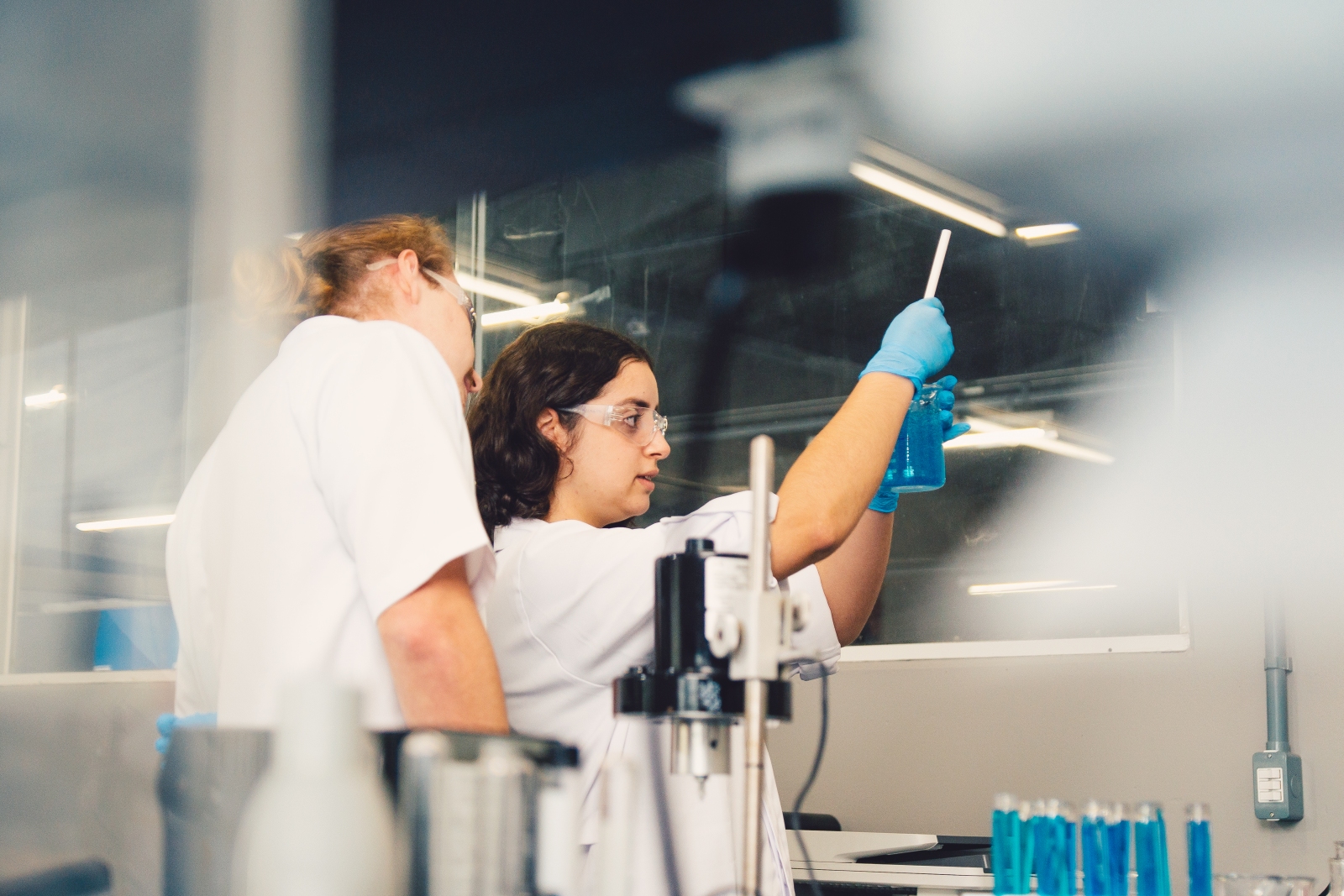
At Macler, we offer technical support so you can develop products aligned with market needs and your customers' expectations.
When the temperature changes, turbidity, phase separation, crystal formation, or changes in viscosity may occur. Two parameters are critical in this analysis: the fog point and the cloud point.
This article will discuss best practices for peroxide-based formulations and tips for developing a high-performance, cost-competitive, and highly stable product.
When we talk about “Heavy-Duty Cleaning,” the resources available when developing a formulation that are capable of combining fast and efficient action are scarce. Learn more about acids in cleaning.
We use our labs to create
intelligent chemical solutions balanced with your reality.
We use our R&D center, our own laboratory with experienced professionals, to deliver intelligent chemical solutions in balance with your reality.
We use cookies on our site to give you the best experience possible. By continuing to browse the site, you agree to this use. For more information on how we use cookies, see our Privacy Policy.