
Lucas MicheluzziDiretor Técnico na Macler

Packaging bulging, product return, and customer complaint stating that the product does not work and the scent has changed...
These are some of the most common undesirable situations in chlorine-free bleaches and hydrogen peroxide-based formulations in general. Hydrogen peroxide, or oxygenated water as it is popularly known, is an oxidizing and highly reactive product. For this reason, manufacturers have difficulty stabilizing their formulations and end up experiencing complicated situations with consumers and clients.
This article will discuss best practices for peroxide-based formulations and tips for developing a high-performance, cost-competitive, and highly stable product.
More results, fewer headaches
We will begin by listing the main points of attention that we must have when manufacturing this type of product:
.png)
Oxidizing agents, such as hydrogen peroxide, react strongly with metals. Therefore, it is of utmost importance that equipment such as tanks, agitators, piping, filling machines, and everything that comes into contact with the product during preparation, quality control, and filling, are preferably made of plastic. Materials such as carbon steel and most stainless steel alloys, except for 316L stainless steel, cause destabilization of the formulation.
However, be careful! Many suppliers sell equipment made of 316 stainless steel, but they manufacture the equipment in the same environment where carbon steel is handled, for example. This contaminates the equipment and can affect the quality of the product manufactured in the contaminated tank. Therefore, the safest recommendation is always to use plastic equipment made of PP, HDPE, UHMW, Teflon, and other inert materials. The use of PET plastic containers for sample collection and storage is not recommended. For this purpose, always use PP or HDPE bottles.

Just as we take great care with equipment and piping, it is important to be aware that PET packaging is not advisable for packaging oxidizing products such as peroxide. In this case, try using PP or HDPE packaging. PETG (Glycol-Modified Polyethylene Terephthalate) has been used with some frequency; however, it's always advisable to perform chemical resistance tests on this type of material and request a warranty from the manufacturer, as there are various specifications for this family of plastics.
A golden tip, which goes beyond the packaging material, is to pay attention to how these packages are being stored. The containers and lids need to be protected from dust in some way. They are usually stored in tightly sealed plastic bags, with the bundles stacked so that the mouths of the bottles face downwards, thus creating even greater security to prevent anything from accumulating inside the bottles. Any accumulation of dust inside the packaging will trigger reactions with the hydrogen peroxide. This is often a factor that is overlooked during the investigation of packaging swelling problems.
Another fundamental factor is water. Water in Brazil tends to have high iron levels. Iron is a contaminant that reacts very strongly with peroxide, and this is often the factor that triggers instability in the formulation. If iron is present in the water available at your factory for the production of peroxide-based products, it is advisable to have the water undergo a minimum purification treatment using a device called a water softener. This type of equipment can remove iron and other contaminants and significantly improve water quality. In addition to peroxide, iron also reacts with and destabilizes dyes and preservatives. In other words, it is a very important issue to investigate in the cleaning products industry.
Furthermore, we must also pay attention to the presence of organic material in the water (sludge, for example). These materials also strongly impair the stability of the peroxide. Therefore, the water must undergo filtration to remove this type of impurity. Additionally, organic matter can also come from handling: contaminated containers, sweat, hair, and dust.
Always remember: water is the most important raw material in the hygiene and cleaning industry and, therefore, needs special attention to avoid major headaches.
.jpg)
It is very important to understand that hydrogen peroxide is not stable at pH above 7.00, and 7.00 is already a critical pH that demands a very well-controlled and high-purity system to remain stable. Therefore, an acidic pH is the most advisable for controlling the stability of the peroxide. A pH between 2.5 and 4.0 is a widespread and safe range to work with. However, depending on the surfactant used, a more or less acidic pH will be required. For example, if sulfonic acid is used, a pH closer to 2.5 is considered safer. If a non-ionic ethoxylated surfactant, such as Berol 175, is used, pHs closer to 4.0 are very acceptable. We will see later how this affects the bleaching efficiency of the formulation.
Lastly, and actually one of the first things to do during product development, it is essential to know which raw materials are compatible with peroxide. This includes surfactants, adjuvants, and thickeners, as well as fragrances and colorants. The most commonly used surfactants in this type of formulation are Sulfonic Acid, Nonylphenol 9,5EO, and Ethoxylated Fatty Alcohol.
We also frequently see the use of amine oxides; however, because they are amines, they can cause white parts to turn yellow if the product is applied pure and with higher concentrations of peroxide.
However, it is most common to find formulations with fragrances incompatible with peroxide. Not many fragrances remain stable under such conditions, and therefore, stability testing of this ingredient during the product development phase is fundamental. In general, more floral fragrances show greater resistance, but this relationship is not direct. That is, this does not mean that a fragrance will be stable with peroxide just because it is floral. It is always necessary to test the stability to ensure that the fragrance is suitable. The same should be done with dyes. Few dyes resist oxidizing agents.
It is very important to have a clear and objective conversation with the suppliers of the inputs so that they understand your needs and can recommend the most suitable product.
DeepSense: the ultimate solution for peroxide-based products
This type of formulation has shown very strong growth in the Brazilian market, attracting the attention of the entire production chain, which is eager for new products and innovations. Recognizing this desire and the significant drawback of the stability of this type of product, Macler has developed a solution that is part of the new DeepSense line, fragrances with embedded technology for enhanced performance.
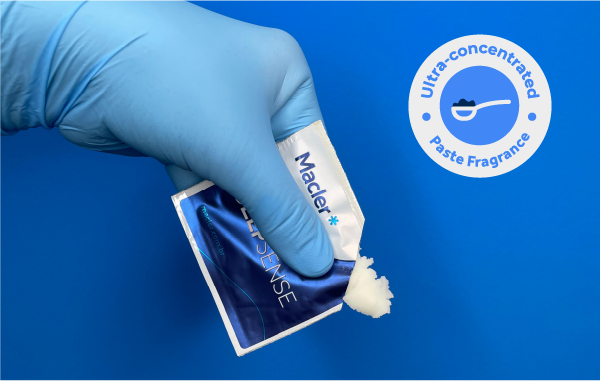
The products AlvaXplode from the DeepSense line promise to increase not only the stability of the peroxide but also enhance its efficiency. This enhancement is so pronounced that Macler's R&D department has developed formulations that halve the peroxide concentration without loss of bleaching efficiency.
Its ability to stabilize peroxide is so pronounced that it allows working with peroxide at a neutral pH, and the closer to neutral pH, the more reactive the peroxide becomes, and therefore it acts more quickly and forcefully. Furthermore, the products DeepSense – AlvaXplode significantly increase wetting power, promoting a much deeper action on textile fibers and the pores of hard surfaces.
Knowing the reality of ferrous waters in Brazil, the DeepSense – AlvaXplode also protects against ferrous contamination and can protect against iron concentrations up to 500 times higher than the maximum iron specification required by the standard applied to drinking water.

Another excellent solution for this type of formulation is the product Berol PBX, a concentrated system of special surfactants and already stabilized hydrogen peroxide. Berol PBX is a product manufactured by the multinational company Nouryon and distributed exclusively by Macler in the Brazilian market. Just like DeepSense – AlvaXplode Berol PBX allows for stable formulations at a neutral pH. This pH, along with the technology and performance of the surfactants present, enables extremely high cleaning and bleaching efficiency.
Knowing the advantages of DeepSense – AlvaXplode with Berol PBX, Macler decided to investigate the combined action of these two ingredients. The result was surprising! The two ingredients are synergistic and complementary, supporting each other for an even greater performance gain.
When the temperature changes, turbidity, phase separation, crystal formation, or changes in viscosity may occur. Two parameters are critical in this analysis: the fog point and the cloud point.
When we talk about “Heavy-Duty Cleaning,” the resources available when developing a formulation that are capable of combining fast and efficient action are scarce. Learn more about acids in cleaning.
Macler continues to expand its portfolio to offer increasingly comprehensive solutions for the industry. The latest addition is Cetrimonium Chloride 50%, a versatile cationic surfactant that combines conditioning and excellent substantivity.
We use our labs to create
intelligent chemical solutions balanced with your reality.
We use our R&D center, our own laboratory with experienced professionals, to deliver intelligent chemical solutions in balance with your reality.
We use cookies on our site to give you the best experience possible. By continuing to browse the site, you agree to this use. For more information on how we use cookies, see our Privacy Policy.