
Nonylphenol: Finding More Sustainable Alternatives Is Both Possible and Necessary
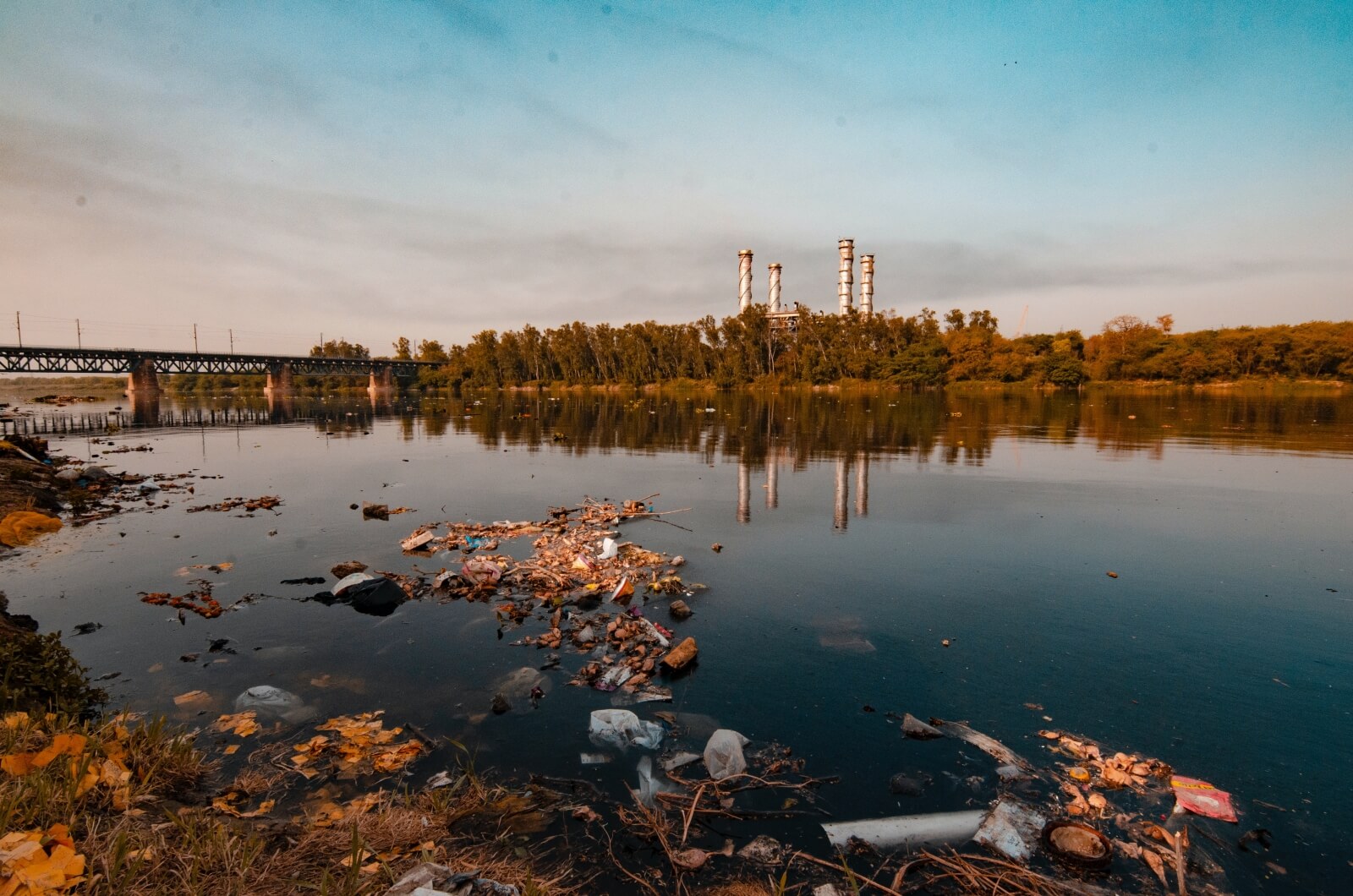
Much has been said about the toxic potential of nonylphenol in the environment. There is no longer any doubt that this molecule is not a sustainable option, and as a result, its use is already subject to serious restrictions and bans in Europe, the United States, China, and even Mercosur. Even so, Brazil continues to discharge thousands of metric tons of this substance into the environment through sanitation products, agrochemicals, and textile auxiliaries.
Learn more about the restrictions and effects of nonylphenol use and how Macler can help your industry replace this compound in your formulations.
What Is nonylphenol?
Nonylphenol is the best-known organic compound in the alkylphenol family, produced through a chemical reaction between nonene and phenol.
Through the process of ethoxylation—a reaction between nonylphenol and ethylene oxide—ethoxylated nonylphenol is produced, a nonionic surfactant that acts as a surfactant, emulsifier, humectant, and dispersant.
It is a compound widely used in industry due to its high efficiency and low cost. It is used in the hygiene, cosmetics, and agricultural markets, particularly in the production of detergents and degreasers, ranging from industrial to household applications.
.jpg)
Effects on the environment
The use of phenol in its pure form already presents several risks to human and animal health. It can be found in wastewater discharged by industrial facilities, posing a threat due to its high toxicity, corrosive nature, and carcinogenic potential.
Ethoxylated nonylphenols, on the other hand, when degraded in the environment, generate nonylphenol and some shorter-chain ethoxylated compounds. In general, toxicity increases as the degree of ethoxylation decreases, turning them into highly polluting substances that can have various effects on the environment.
Its widespread and recurring use in industry causes it to leach rapidly into water, leading to contamination that can affect both animals and humans. In addition, the reuse of wastewater for irrigation on agricultural land or its use in the formulation of pesticides also ends up contaminating the soil.
Human exposure to the compound’s toxicity can occur through the ingestion of contaminated food and water or through the migration of nonylphenol from food and cosmetic packaging.
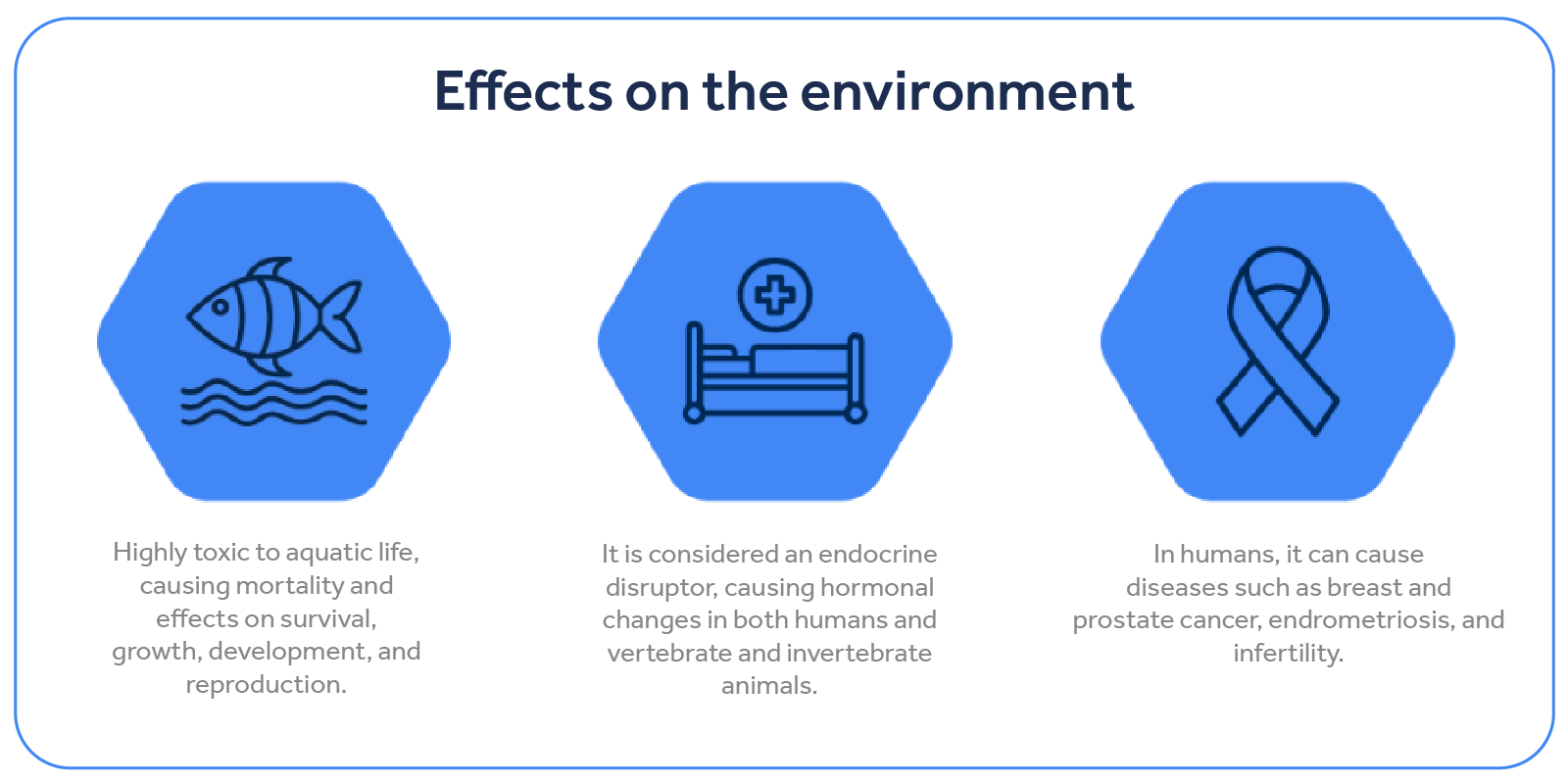
The greatest impacts can be seen in aquatic life, where they are already widely recognized. Their effects are considered persistent, bioaccumulative, and highly toxic to fish, plants, and other aquatic ecosystems, causing acute mortality and affecting survival, growth, development, reproduction, and fertility, even at low levels of exposure.

In addition, nonylphenol has been classified as an endocrine disruptor (ED). This means that, once inside the body, it is identified as a natural hormone and can mimic or block the action of actual hormones.
These hormonal changes affect humans as well as vertebrate and invertebrate animals. In humans, the possible consequences include diseases such as breast and prostate cancer, endometriosis, and infertility.
Legislation Around the World
Around the world, several countries and organizations have already taken steps to ban or restrict the use of nonylphenol.

In the European Union, the compound has been listed as a priority hazardous substance since 2000, restricting the marketing and use of products containing more than 0.1% of the substance. In textile products, the concentration is limited to 0.01%.
In the United States, nonylphenol is included on the list of toxic chemicals, and there are several action plans underway to ban or limit the manufacture or use of the substance.
Recently, China also classified nonylphenol as a controlled substance within the country, completely banning its use in cosmetics, agricultural products, and for the synthesis of nonylphenol ethoxylate.
In Brazil, however, its toxicity has not yet been officially addressed by regulatory agencies, resulting in its unrestricted use despite the risks. Nevertheless, some voluntary initiatives are already underway.
In the textile sector, for example, ABNT established the NBR 16787 standard, which regulates the use of chemicals in textile products on a voluntary basis. The initiative led to the creation of the Chemical Safety Guide for Textiles, distributed by the Brazilian Textile and Apparel Industry Association (ABIT) and the Brazilian Chemical Industry Association (ABIQUIM).
Some companies in the industry have also begun to support international initiatives such as ZDHC (Zero Discharge of Hazardous Chemicals), which aims to eliminate substances considered harmful to the environment. The program has the support of major brands and manufacturers to carry out initiatives that encourage the industry to use chemicals responsibly.
More sustainable alternatives are possible
The use of nonylphenol has always been a topic of internal discussion at Macler. SmartLab works daily to find effective and sustainable solutions to replace this substance.
One example is Isogen E-TEC, a fragrance emulsifier for disinfectants and cleaners that offers superior performance and cost advantages over ethoxylated nonylphenol.
(1).png)
From an environmental standpoint, Isogen E-TEC is a rapidly biodegradable, vegan, phenol-free, ethoxylate-free product derived from renewable sources.
It is also more cost-effective and, in most cases, requires a lower dosage compared to traditional emulsifiers, thereby reducing the cost per application in the product.
Its use does not affect the levels of active ingredients, fragrance, or colorants—factors that are crucial to product performance and consumer purchasing decisions.
In addition to all the benefits mentioned above, it is also very easy and convenient to work with.
Watch the video to learn more:
In addition to Isogen E-TEC, Macler also offers a range of other emulsifiers, detergents, and degreasers in its portfolio that effectively replace nonylphenol.
Do not wait for the legislation: Replace nonylphenol in your formulations now
Taking on the role of an agent driving global change, Macler offers all customers free research and development services to completely replace nonylphenol in their formulations.
We will dedicate the full effort of our experienced team not only to maintaining product performance and cost, but also to improving them with more sustainable alternatives.
Contact our SmartLab and become an agent of change.
Learn More
Understand what HLB is used for and how it helps you choose the ideal surfactant to create more stable emulsions.
The quality of the formulation depends on the raw materials, and minor variations can lead to losses. With this in mind, Macler developed TrustScan, a proprietary evaluation methodology. Through it, we ensure reliable and safe final products.
Isogen QUALI, a Macler solution developed as a technological alternative to simplify detergent formulations, acting as a single base capable of replacing multiple surfactants simultaneously.
Our chemistry
We use our labs to create
intelligent chemical solutions balanced with your reality.
Products
We use our R&D center, our own laboratory with experienced professionals, to deliver intelligent chemical solutions in balance with your reality.
