
The Influence of Representational Systems on Communication
Everyone communicates and processes information differently. Communicating using the other person’s Preferred Representational System enhances understanding and makes communication more effective. Learn more in this article and identify your Preferred Representational System.
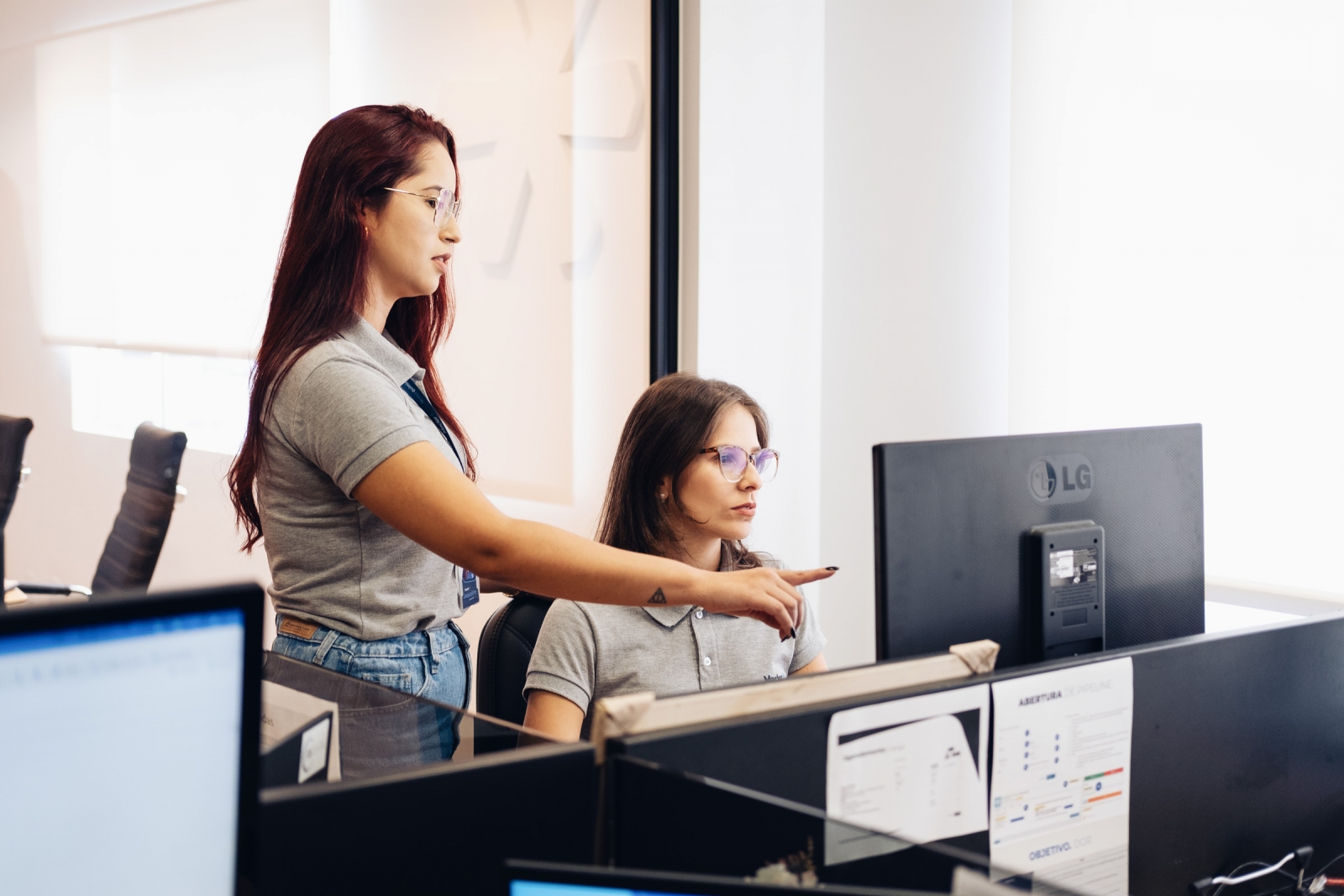
Have you ever tried to share information and had trouble getting your point across? Have you noticed that it is much easier to communicate with some people, while with others we have to make a greater effort?
Have you also noticed that people often suggest a specific way to help them understand? For example, “show me again,” “repeat what you said,” or “draw it for me.”
It is very likely that this happened because you were not using the message recipient’s Preferred Representational System.
What is a Preferred Representational System?
Our brain receives information through our sensory system: sight, hearing, touch, smell, and taste. In this sense, our sensory system is nothing more than a set of gateways through which information flows from the outside world into our inner world. Each gateway is a specific system whose function is to create an internal representation of our experience of the world.
Representational systems are responsible for encoding what occurs in the external world through visual, auditory, and kinesthetic (tactile, olfactory, and gustatory) channels, and based on these, we create concepts and relationships with the people and environments around us.
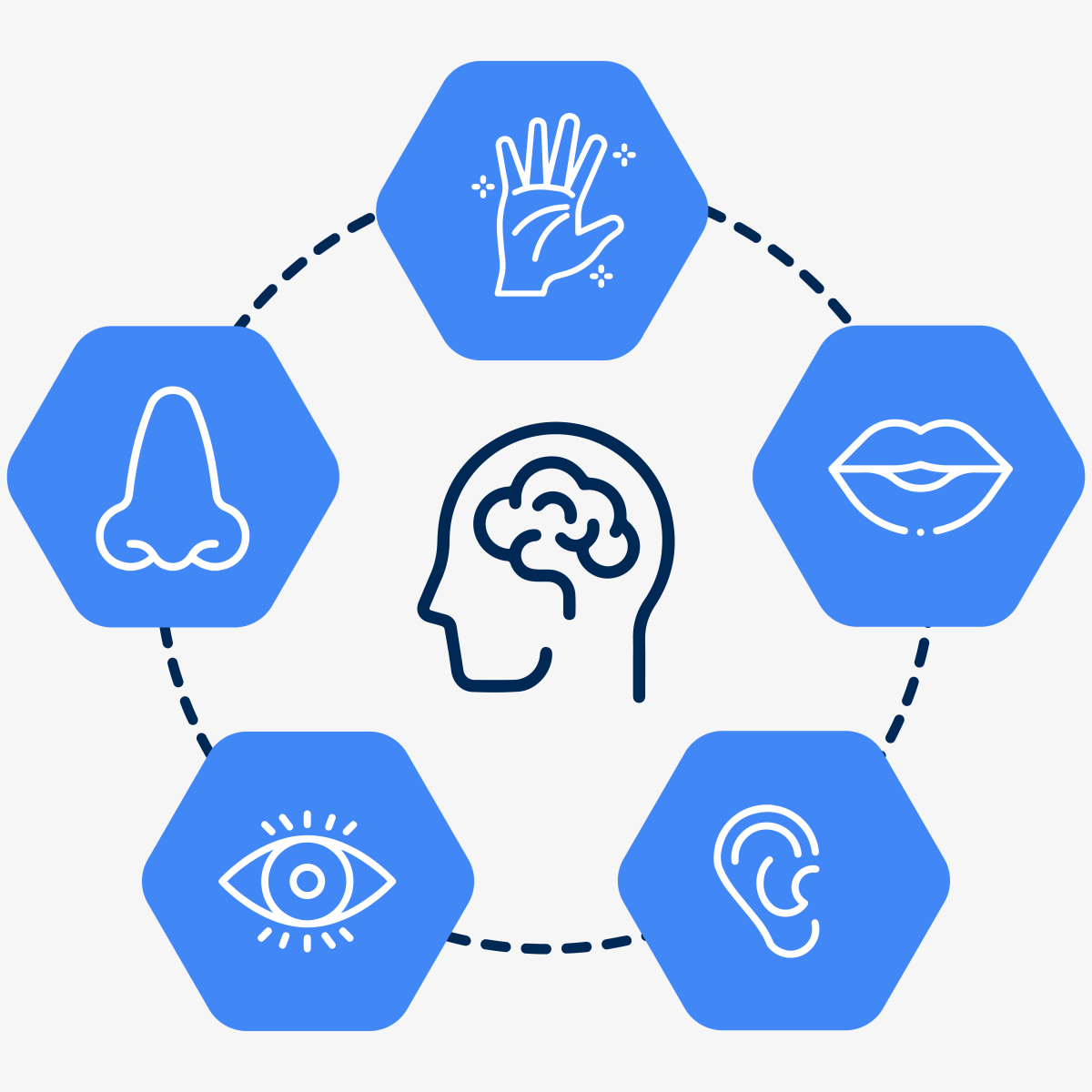
However, each person has one form of perceptual communication that is more acute than the others, which determines their Preferred Representational System—that is, how that person best understands the world.
Neuro-Linguistic Programming (NLP) provides professionals with techniques that enable them to identify the preferred representational system of the person being assessed. This makes all the difference in the way that person chooses to communicate.
In the study of Neuro-Linguistic Programming, representational systems are divided into four categories:
Visual: one who sees
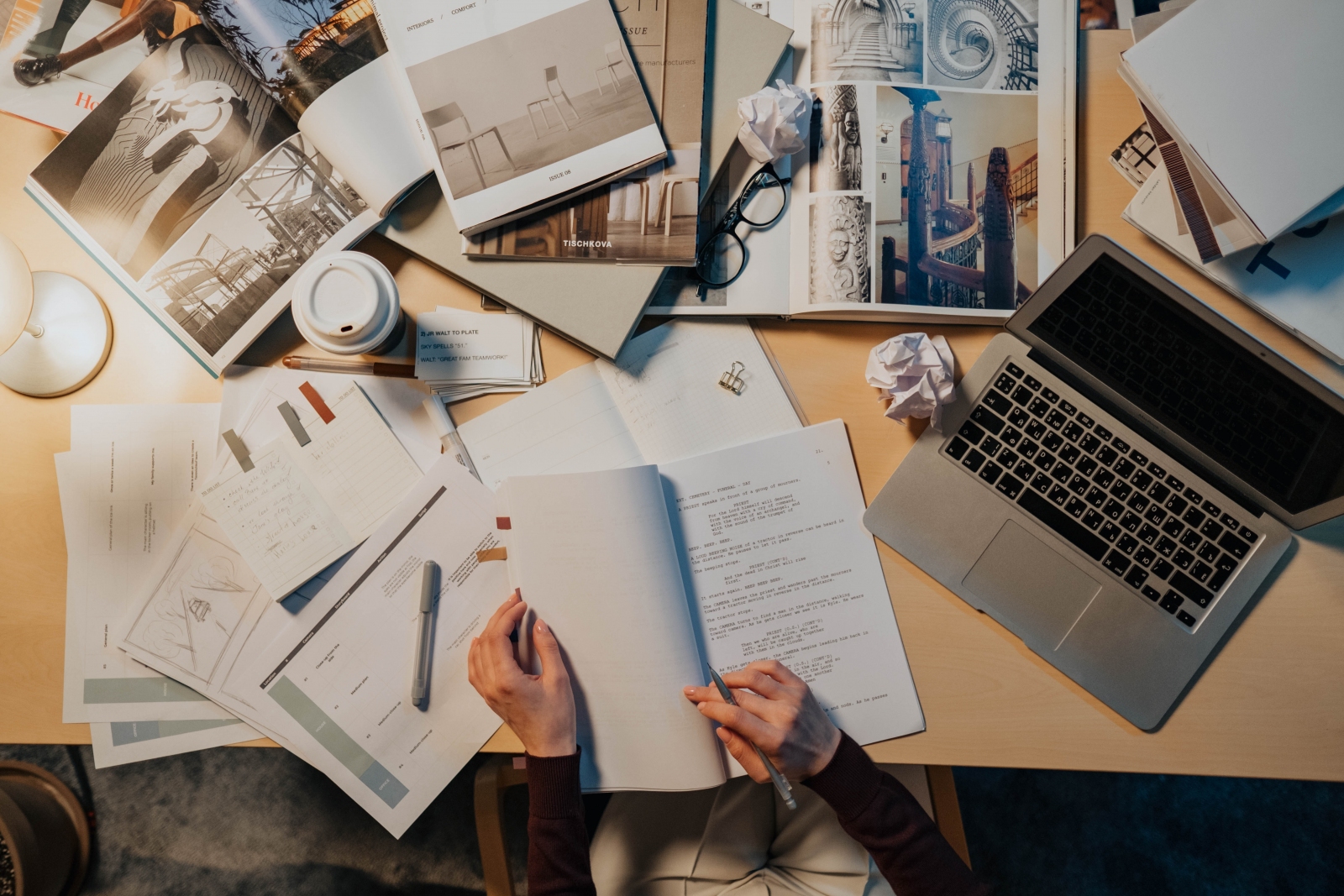
People with a predominant visual learning style are drawn to beauty and aesthetics, to shapes and details. To understand what others are telling them, they need to be “shown” things. Their learning is stimulated by images, colors, shapes, and light. They do not place as much value on words and do not always respond well to touch, unlike kinesthetic learners.
People with a predominant visual learning style tend to be faster, more anxious, restless, and impulsive. The more visual they are, the more authoritative, forthright, and sincere they tend to be.
Other important characteristics include the ability to multitask, adapt to tight deadlines, implement projects, and meet goals. These are people who tend to plan for the future, pay attention to details, and value organization and harmony.
- Think in images;
- Memories contain more visual details than sensations or sounds;
- Describe the appearance of people or things better than what they hear or feel;
- Learn better by watching someone do something than by listening;
- Always attuned to everything around them, so they almost never relax;
- See “the forest rather than the individual trees” more clearly;
- Between what is practical and what is beautiful, they will always choose what is beautiful.
Auditory: one who hears
People with an auditory dominance do not place much value on appearances, but rather on good conversation, common sense, and intelligence. To be sure of something, auditory learners need to hear it. Their memory for sounds is fantastic: they are able to remember things that were said to them many years ago. They can concentrate and retain information just by listening; they enjoy music and talking on the phone, always preferring to listen rather than speak.
With a logical and practical mindset, they prefer predictability and routine. They are more calm, thoughtful, shy, and perfectionists. They are always ready to discuss problems because they believe in the logic of arguments.
They are strict and formal. Noise, shrill or harsh voices bother auditory learners. They like to concentrate and don’t mind having to redo the same things several times, as long as they are correct. For an auditory learner, working with analysis and calculations is a pleasure.

- Enjoy working with tables, charts, and focusing;
- Decision based on true, accurate, and logical data;
- Prefer dealing with processes rather than people;
- Good listeners, rational, and critical;
- Focused and like to follow standards and rules;
- Learn best by listening rather than by watching or doing;
- See “the tree rather than the forest” more clearly.
Kinesthetic: one who feels
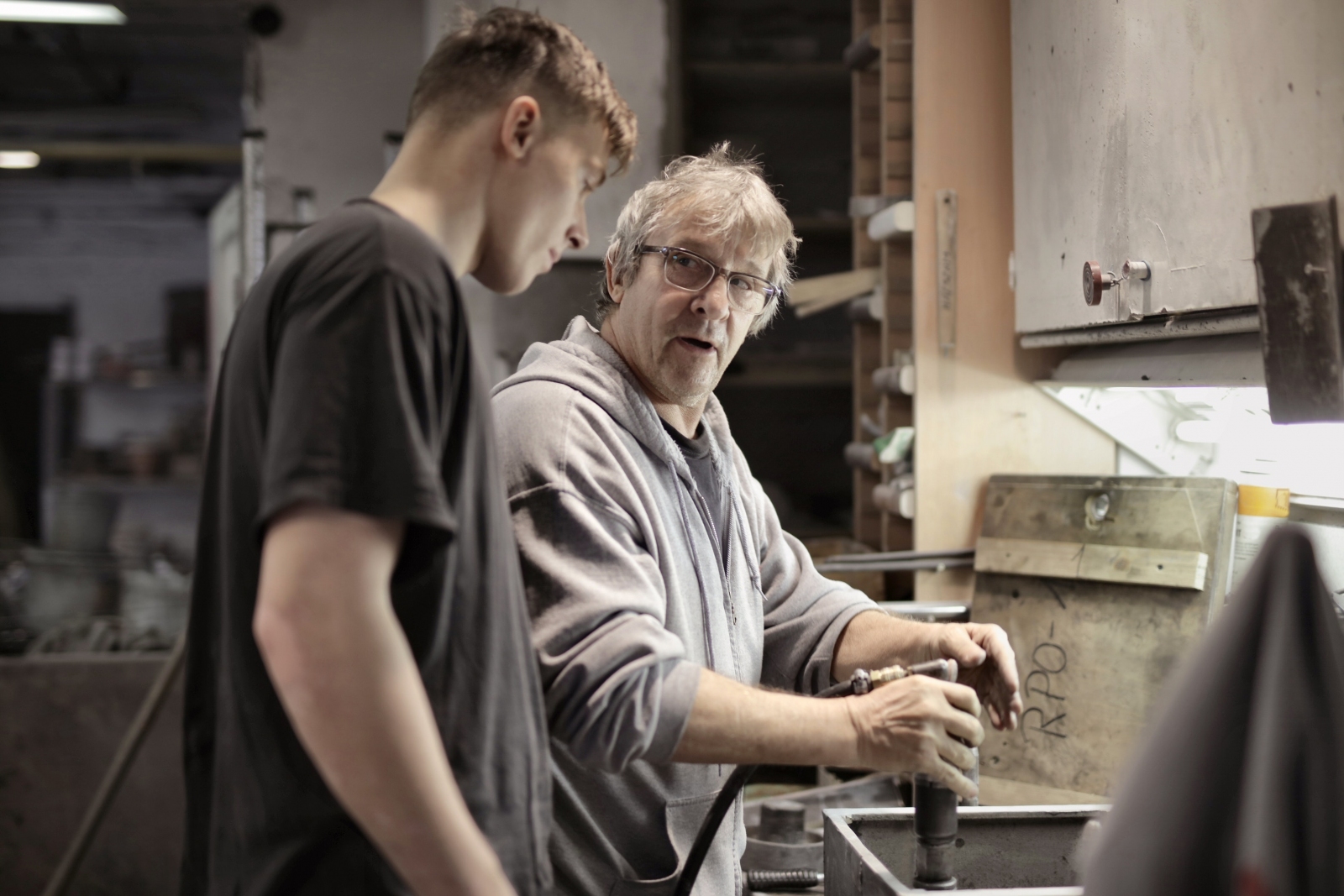
These are people who enjoy touching and experiencing the world around them. Sensations and feelings are key factors in their decision-making. They learn quickly when they engage with the material and are exposed to hands-on activities, such as conducting experiments and participating in group interactions.
This person prefers comfort over beauty and always seeks well-being, pleasure, and coziness. They need to be hugged, touched, and kissed to feel loved. They feel hurt when their need for physical contact is not reciprocated.
They prefer comfortable clothes, shoes that do not pinch, swimming, walking on the sand, and being close to nature. They are socially oriented: they like people, talking, and being in the spotlight; they love events, parties, and opportunities for communication.
Disorder reigns, but creativity runs wild. They like to take risks and prefer to work on the street or in roles that require contact with people or the verbal expression of ideas.
- Adapt quickly to any environment;
- Enjoy working as part of a team;
- Outgoing, sociable, talkative;
- Feel the need to get along well with others;
- Prefer to improvise;
- Learn best by doing rather than by watching or listening;
- Creative and intuitive.
Digital: someone who listens and understands
A digital person asks many questions and needs a lot of information. People with these characteristics study ideas in depth to see if they make sense, weigh the consequences of each decision, and are always thinking and engaging in internal dialogue.
They are more logical and rational, as well as skeptical, critical, and observant. They are adept at all forms of communication, engaging the five senses in a more balanced way.

- Talk to themselves all the time;
- Have trouble concentrating;
- Need to understand the details of everything;
- Ask a lot of questions;
- Rational and need a lot of information to make decisions;
- Methodical and like lists and step-by-step instructions
Why is it important to understand the Preferred Representational System?
Understanding your audience’s representational system makes communication more effective. When you choose to communicate using the other person’s preferred representational system, you speak the same language and foster a sense of connection.
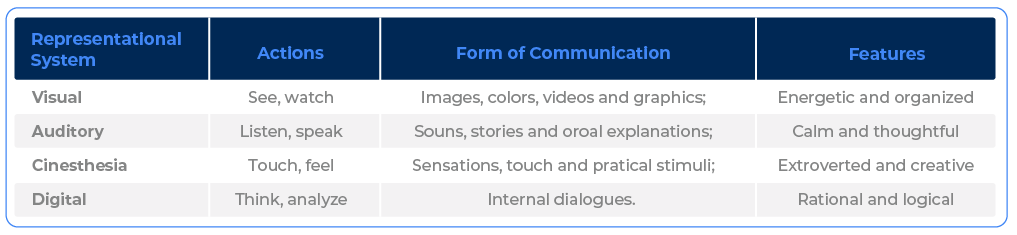
For instance, a visual learner will pay close attention to a written explanation or one filled with graphs and diagrams. An auditory learner will value a well-delivered oral explanation and enjoy listening to a good story. A kinesthetic learner will take into account the atmosphere of the environment and hands-on experience.
In this way, it is possible to develop greater persuasion and negotiation skills, build self-confidence, and improve communication—factors that can be of great help in personal and professional relationships.
Would you like to identify your Preferred Representational System? Visit the AGC Institute website to take the test: click here.
Learn More
Understand what HLB is used for and how it helps you choose the ideal surfactant to create more stable emulsions.
The quality of the formulation depends on the raw materials, and minor variations can lead to losses. With this in mind, Macler developed TrustScan, a proprietary evaluation methodology. Through it, we ensure reliable and safe final products.
Isogen QUALI, a Macler solution developed as a technological alternative to simplify detergent formulations, acting as a single base capable of replacing multiple surfactants simultaneously.
Our chemistry
We use our labs to create
intelligent chemical solutions balanced with your reality.
Products
We use our R&D center, our own laboratory with experienced professionals, to deliver intelligent chemical solutions in balance with your reality.
