
Renam Luis AcorsiDoutor em Eng. Química e Analista de P&D na Macler

On a cool autumn morning, looking at a garden, you notice that the leaves of the plants have countless droplets on their surface. Before leaving home, after washing your face, you notice that, as you turn off the tap, the stream of water gradually slows down and, little by little, the water begins to drip. On summer days, on the surface of a calm lake, it is common to see mosquitoes walking on the water without sinking.
.jpg)
You have certainly encountered some of the phenomena mentioned above. And what do these phenomena have in common? The answer is relatively simple: they can all be explained by a concept called surface tension.
But what exactly is this thing called surface tension?
Can we practically apply this concept of surface tension to the development of everyday products? Let's try to develop this line of thought to build one of the most widely used concepts in industry: surfactants.
To do this, we will maintain a common element mentioned in all the examples above: water. It is convenient that we analyze this substance at a level smaller than the microscopic; let's see what its molecule looks like:
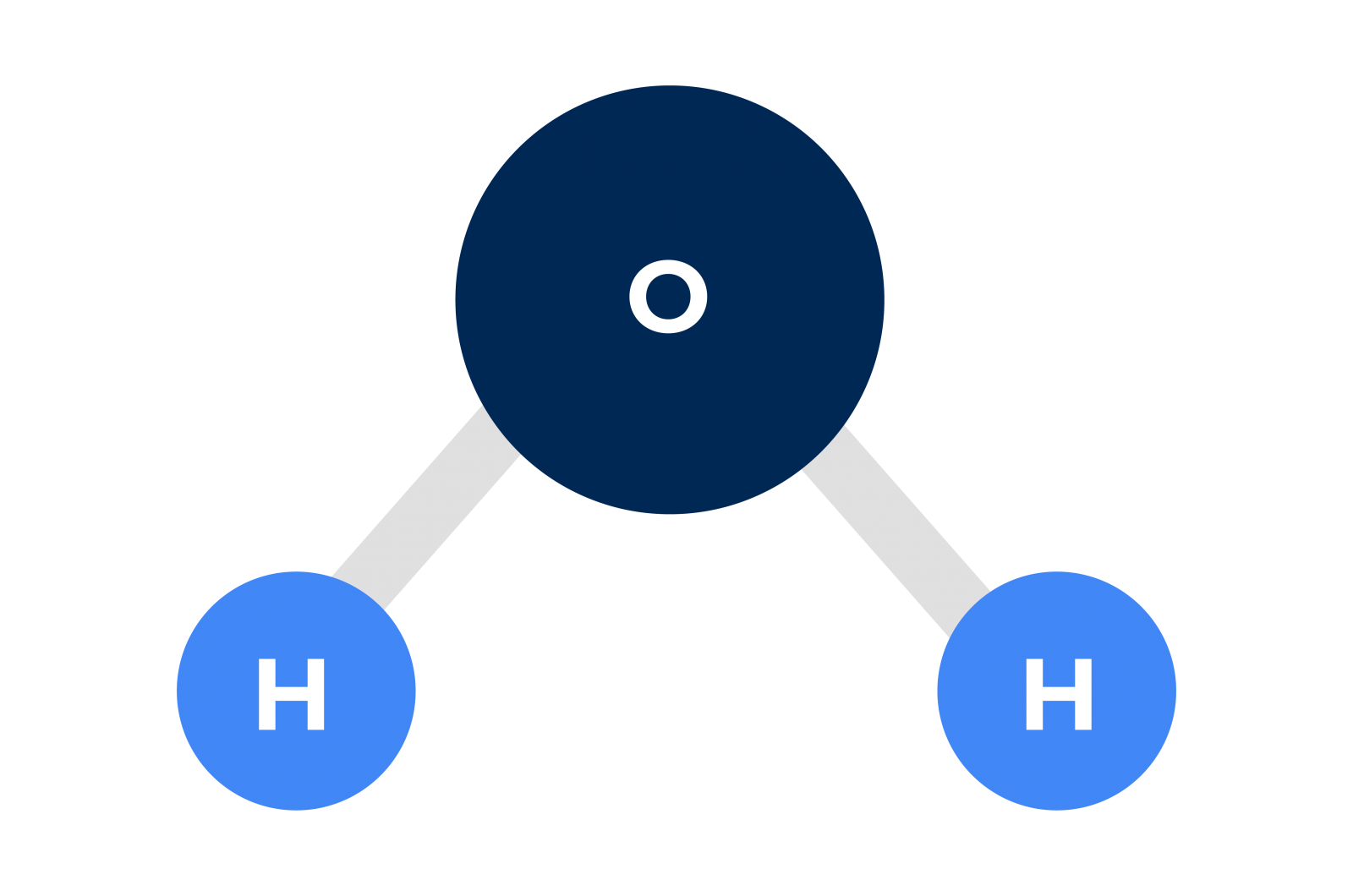
This molecule is composed of two hydrogen atoms and one oxygen atom in a very specific angular position. Oxygen, on the other hand, is a highly electronegative atom, meaning that when chemically bonded, it tends to attract electrons from other atoms, making its surroundings a region with a high probability of finding electrons. This attraction of electrons from the bonded hydrogen atoms results in a region with a low probability of finding electrons in the area between the two hydrogen atoms.
Therefore, since electrons have a negative electric charge, the region around the oxygen atom in water will have an overall negative electric charge, while the region surrounding the hydrogen atoms—where electrons are unlikely to be found—will have an overall positive electric charge.
In other words, the water molecule will have two regions with very different concentrations of electrical charges, one region with a negative charge and one region with a positive charge, as shown in the following figure.
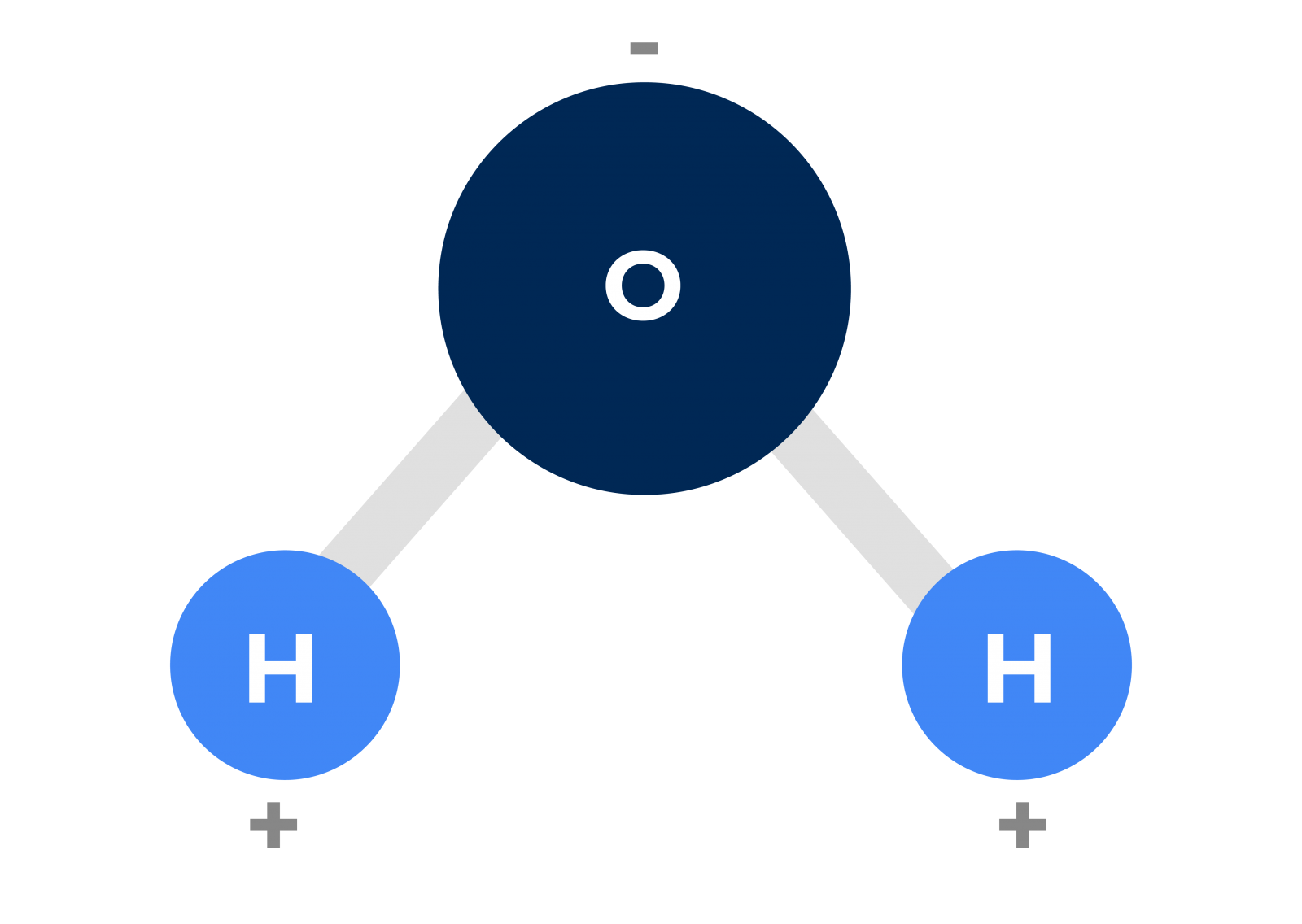
Thus, we can think of each water molecule as behaving much like a tiny magnet, with a positive pole and a negative pole. Molecules with this characteristic are called polar molecules.
What does this have to do with surface tension?
Let's think about this for a moment: consider a glass of water. If you analyze the water molecules in the glass, just like with magnets, the positive pole of one molecule will attract the negative pole of others. Since a small sample of water contains a gigantic number of water molecules, this system of attraction ends up generating a gigantic network of interactions between the different water molecules:
.png)
However, note that not all water molecules will be subject to the same attractive force: the innermost water molecules end up experiencing the greatest force, with attractions from all sides, as they are surrounded by other water molecules. This attractive force between identical molecules is what we call cohesive force.
The outermost water molecules, however—that is, those on the liquid surface—will experience unequal attractive forces. Since air is a mixture of nonpolar substances—meaning it exerts no attractive force on water molecules—these molecules will experience significant attraction only from the water molecules directly below them. This unevenness in the forces acting on the surface molecules causes them to be “pulled” back into the liquid, bringing them closer to one another. These surface molecules are subject to what we call adhesive forces.
And how will these two types of forces acting on the system interfere with the stability of the water inside the glass? At first, the answer may not seem so simple: there will be a tendency for the number of molecules at the interface between the water and the air to decrease, since a smaller number of molecules in this region leads to a minimization of surface forces, making the system more stable.
To better visualize this answer, imagine a concert by a famous rock star taking place in a packed venue, where the only exit is onto a balcony. Given the musician's fame, it's to be expected that the large crowd of fans (and here, each fan should be treated as an individual) will include a significant number of people who enjoy the "chaos," feeling comfortable being in the middle of the audience, being pushed and bumping into everyone around them.
However, not all fans at the show enjoy this pushing and shoving: some feel more comfortable simply appreciating the music, even from a distance – and these fans who prefer less contact end up positioning themselves more on the periphery of the venue, meaning that a few listeners will tend to stay in the exit area (the interface between the fans and the open air). In other words, everyone present wants to watch the show, but the layout of the venue causes fans to position themselves in the most comfortable way so that everyone can see.
And here’s an interesting fact: this natural tendency to minimize the number of molecules on a surface—which we just demonstrated—also explains why droplets of polar substances, such as water, tend to be spherical. Given that at the air-water interface the number of molecules must be minimized and that cohesive forces pull all the molecules toward a central point, it’s natural for the droplets to take on shapes close to spherical, since a sphere is the geometric shape with the smallest ratio of surface area to volume.
Although this statement is not difficult to demonstrate mathematically, we can try to show it in another way: imagine a group of children in an open courtyard on a cold day, and to avoid getting lost, they must hold hands. Since it’s a cold day, the children tend to huddle together to keep warm, and as they do so, they soon form a circle—or a “cluster of children”—trying to stay as close together as possible so that everyone feels less cold.
That's basically what will happen to the water molecules: all the molecules will attract each other, just like the children left in the open yard mentioned above.
In other words, with the explanations given here, we have already managed to explain two of the phenomena mentioned at the beginning of this text.
In conclusion, the force that must be overcome for the liquid surface area to increase is what we call surface tension. That being said, it's clear that the greater the polarity of the molecules, the greater the force acting to pull the molecules from the surface into the liquid.
What are surfactants?
A very useful practical concept derived from the definition of surface tension is that of surfactants.
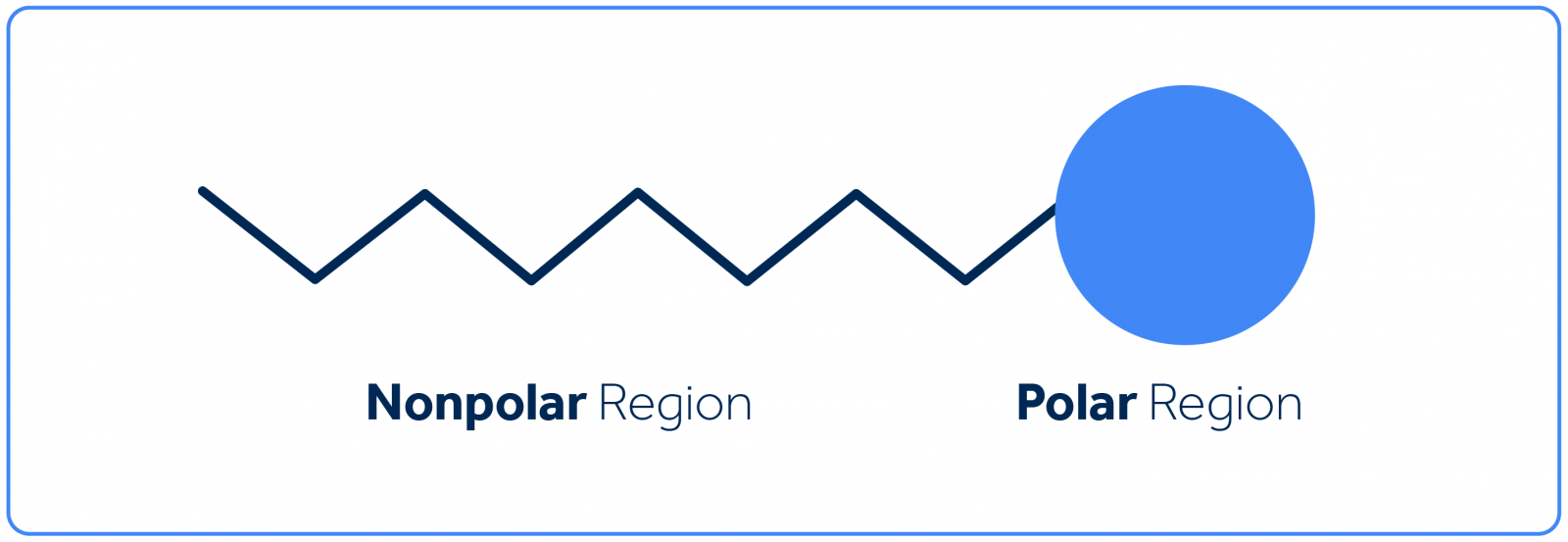
Surfactants are much larger and more complex molecules than those we have mentioned so far: they are known as amphipathic or amphiphilic because they have polar and nonpolar regions (also known as polar and nonpolar heads), which means that a surfactant molecule has regions that are soluble in water and regions that are soluble in hydrocarbons, oils, and fats.
These surfactant molecules are generally represented as follow:
Types of surfactants
The nonpolar tail of a surfactant tends to be a carbon chain—that is, a region consisting mainly of carbon and hydrogen atoms.
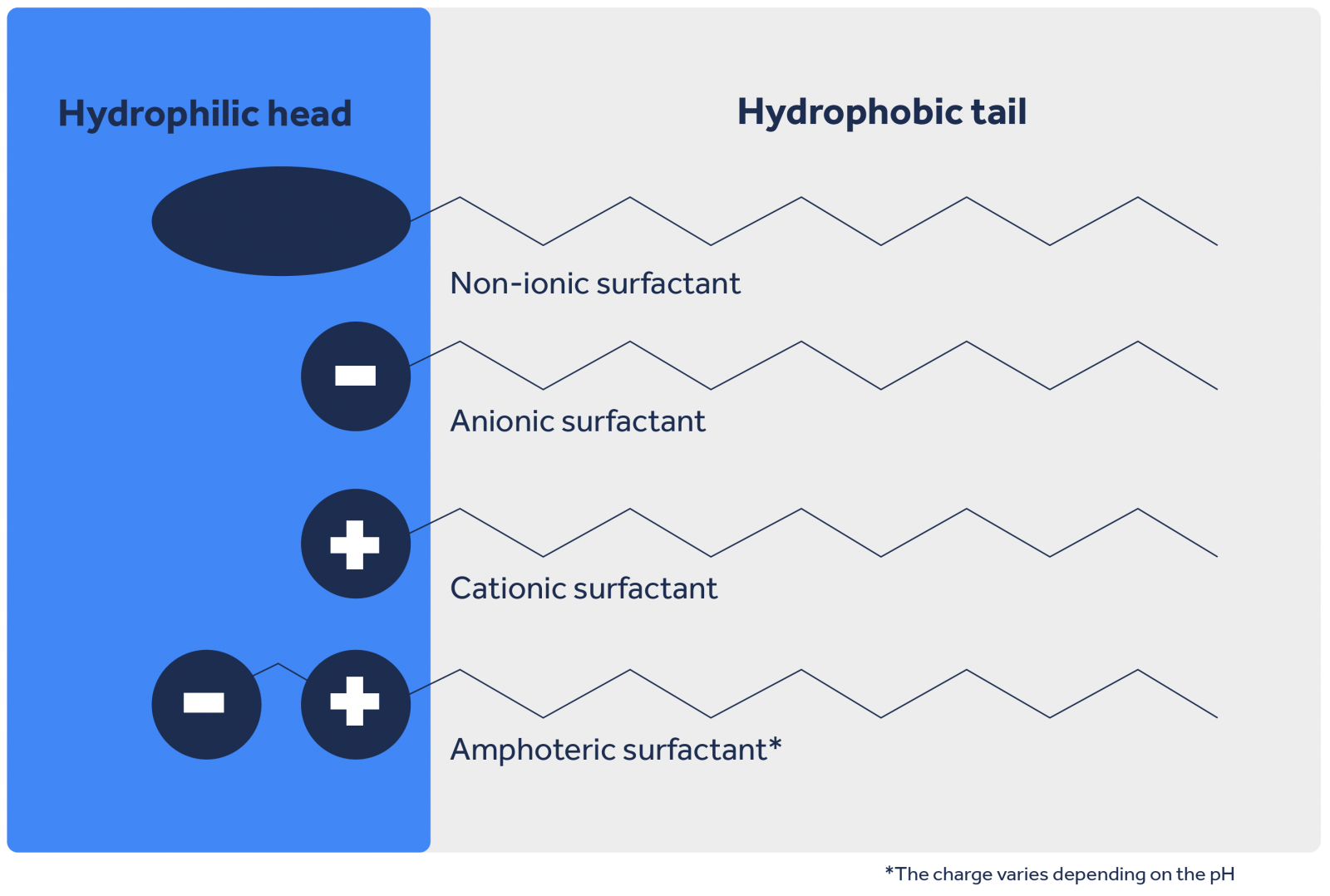
The polar head, on the other hand, which is responsible for the surfactant’s solubility in water, is composed of different atoms, and the behavior of this region when dissolved helps classify the type of surfactant.
Anionic surfactants
When a solubilized surfactant dissociates and exhibits an overall negative charge on its polar head, it is classified as anionic. This type of polarity is useful for interacting with a wide variety of contaminants, especially particulate contaminants, which makes these surfactants very useful in the formulation of detergents and soaps.
In general, anionic surfactants also have high solubility in water, but low temperatures tend to reduce this solubility, which may require careful consideration when developing formulations. Another common characteristic of anionic surfactants is their high foaming ability, which is desired by consumers in various types of products. Despite these advantages, this type of surfactant tends to have some difficulty emulsifying oils and fats compared to other types of surfactants.
Anionic surfactants are among the most common on the market, with a large number of examples, such as Sodium Lauryl Sulfate, Sodium Lauryl Ether Sulfate, Sulfonated Alpha Olefins, and Sulfonic Acid.
Cationic surfactants
When a solubilized surfactant dissociates and exhibits an overall positive charge on its polar head, the surfactant is classified as cationic. Surfactants with this positively charged polar head tend to exhibit good antistatic and antimicrobial properties, making them very common in textile applications, in the formulation of cosmetics, and in disinfectant products, such as hair conditioners, fabric softeners, and disinfectants.
Although not as common on the market as anionic surfactants, a good number of cationic surfactants are also available. The vast majority of them are nitrogen-based, but it is also possible to find surfactants in this class based on phosphorus and sulfur. Examples include Benzalkonium Chloride and Dialkyl Dimethyl Ammonium Chloride.
A brief aside regarding the mixing of surfactants is necessary before we continue: since the charge produced by anionic and cationic surfactants is opposite, these two types of surfactants tend to be incompatible, so their mixture has a high chance of forming precipitates in the formulations, drastically and negatively affecting the properties of the surfactants.
Non-ionic surfactants
There is also the possibility that a solubilized surfactant may not carry any charge at all—that is, it dissolves but does not dissociate. In this case, the surfactant is nonionic. This type of surfactant tends to be very versatile, offering a wide range of options with diverse characteristics, derived from a wide variety of molecules. Given this wide range, it is common to classify them into groups based on their foaming capacity and a value known as HLB. The HLB value indicates the hydrophilic-lipophilic balance of the surfactant, directly affecting its solubility—depending on the HLB value, a nonionic surfactant will exhibit greater solubility in water or in oils and fats.
Among the various types of non-ionic surfactants that we can find on the market, some examples are alkyl glycosides, ethoxylated fatty alcohols, and the infamous nonylphenols.
Amphoteric surfactants
Finally, there is one last type of surfactant: amphoteric surfactants. When dissolved, this type of surfactant may or may not dissociate, which means it can behave as an anionic, cationic, or nonionic surfactant. What determines the behavior of an amphoteric surfactant is the medium in which it is found, with acidity being one of the main ways to control it. Its properties depend heavily on the characteristics of the hydrophobic tail and the hydrophilic head, as well as on the position and type of polar head that the molecule has.
In general, amphoteric surfactants are not very useful when used alone: this type of surfactant shines when combined with other surfactants, potentially generating a wide variety of synergies. However, among the examples of properties of this type of surfactant, one can mention high water solubility, good surface activity, high foam stability, low toxicity, and rapid biodegradability.
As examples of amphoteric surfactants, perhaps the most famous is cocamidopropyl betaine.
Micelle formation
Even when discussing surfactants, there is another interesting phenomenon related to them: the formation of micelles. Micelles are structures naturally formed by solubilized surfactants when regions of similar polarity unite within them.
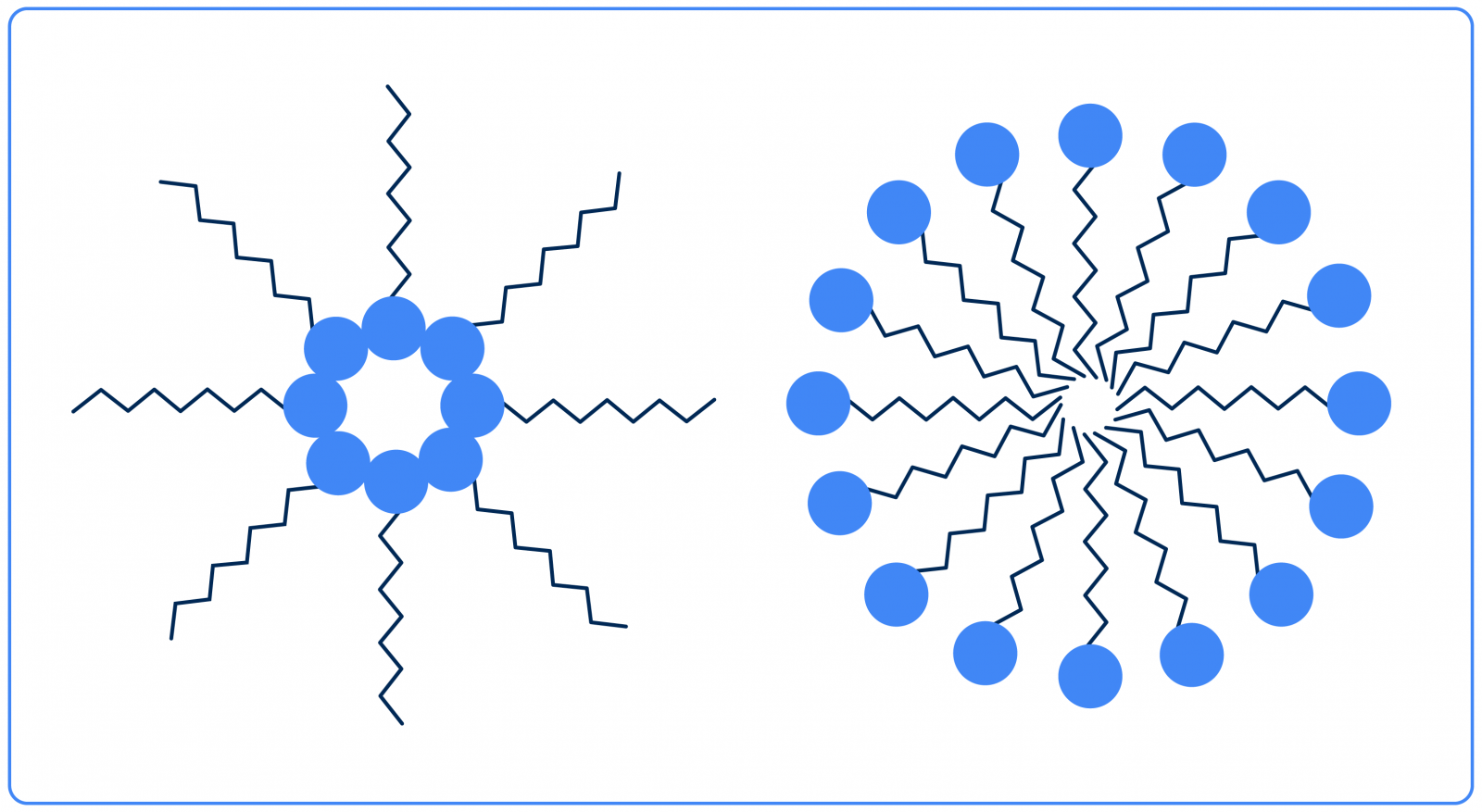
Above are two simple examples of micelles: on the left, a micelle in an oily solution, since its nonpolar part faces outwards, and on the right, a micelle in an aqueous solution, since the polar regions face outwards.
Despite their appearance, micelles should not be viewed as static: they are highly dynamic and allow the solubilization of substances that are insoluble in the liquids in which the surfactants are found.
This characteristic allows them to be used for a wide variety of purposes, from cleaning, where they can dissolve fats in water, for example, to more complex uses, such as the controlled dispersion of pharmaceuticals.
It is worth noting that not just any amount of surfactant dispersed in a liquid will be able to produce micelles: there is a minimum concentration of surfactants that must be present in a medium for this phenomenon to begin – this concentration is what we call the critical micelle concentration, or CMC.
To better understand this critical micelle concentration, we need to examine the solubilization of a surfactant from the very beginning. When we add a tiny amount of surfactant to a small amount of water, these few surfactant molecules will migrate to the surface of the liquid, at the interface between the liquid and the air, where they will undergo a phenomenon called adsorption.
If we continue to slowly add surfactant to the water, these new molecules will continue to migrate toward the liquid-air interface until the entire surface is completely covered by adsorbed surfactant molecules.
When sufficient surfactant is added to saturate the liquid-air interface, any excess added will cause the number of surfactant molecules in the liquid medium to increase.
Since surfactants are molecules that have two very distinct regions, a nonpolar tail and a polar head, it is to be expected that these nonpolar tails will have difficulty soluble in water, since this portion of the surfactant molecules is not soluble.
Finally, when the number of surfactant molecules dispersed in the liquid reaches a certain value—which we call the critical micelle concentration (CMC)—there are enough surfactant molecules dispersed in the liquid for them to begin to come together and organize themselves in such a way as to protect their nonpolar tails from contact with water.
In general, surfactants require between 30 and 200 molecules to form a micelle that effectively protects the nonpolar tails. This may seem like a lot, but in molecular terms, it is a tiny amount. Furthermore, for there to be a real chance of these micelles forming, it’s not helpful to think in terms of the number of molecules: the correct approach is to consider the surfactant concentration—that is, how many surfactant molecules there are per unit mass of liquid.
Therefore, although a micelle needs between 30 and 200 surfactant molecules to form, in terms of concentration, most surfactants will need to be present at a concentration of up to 1% for the micelle formation phenomenon to begin.
Next, we will briefly discuss the behavior of surface tension measurements in relation to surfactant concentration in the medium, briefly evaluating this critical micelle concentration from another point of view.
But what is the relationship between surfactants and the surface tension of water?
Since surface tension is directly related to the attractive forces between molecules, the addition of surfactants—which have both polar and nonpolar regions—will reduce the attractive force between water molecules, as they will encounter “intruders” that weaken this force. Thus, the more surfactant added to an aqueous solution, the lower the surface tension of that solution will be.
However, this decrease in surface tension is not infinite: the minimum surface tension of an aqueous solution is reached when the surfactant is present at its CMC. Beyond this concentration, adding more surfactant will no longer lower the surface tension of the aqueous solution.
Would you like to learn more about surfactants and their applications? Do you need help choosing the ideal surfactant for each application? Would you like to evaluate the effects of combining different surfactants?
Macler’s SmartLab is ready to assist you with all these questions. Our experts combine technical knowledge with practical results, which can help your company at every stage of your product’s development.
Contact us and talk to an expert.
Understand what HLB is used for and how it helps you choose the ideal surfactant to create more stable emulsions.
The quality of the formulation depends on the raw materials, and minor variations can lead to losses. With this in mind, Macler developed TrustScan, a proprietary evaluation methodology. Through it, we ensure reliable and safe final products.
Isogen QUALI, a Macler solution developed as a technological alternative to simplify detergent formulations, acting as a single base capable of replacing multiple surfactants simultaneously.
We use our labs to create
intelligent chemical solutions balanced with your reality.
We use our R&D center, our own laboratory with experienced professionals, to deliver intelligent chemical solutions in balance with your reality.
We use cookies on our site to give you the best experience possible. By continuing to browse the site, you agree to this use. For more information on how we use cookies, see our Privacy Policy.
