
Additives: Role and Importance in Formulations
Chemical additives, though often underestimated, play a fundamental role in determining the quality and performance of many products we use in our daily lives. Their discreet yet crucial role ensures that active ingredients work effectively and that the product remains stable over time.
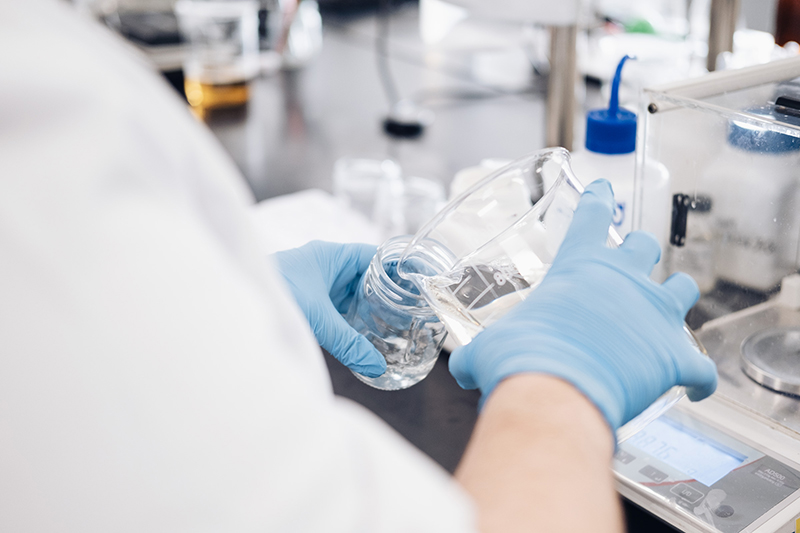
What are additives?
Additives are products that work in conjunction with surfactants, assisting them in the cleaning, suspension, and dispersion processes. Additives must always be used in combination with a surfactant, but they should not be confused with surfactants. Below, we will explore the additives most commonly used in cleaning products.
Sodium Tripolyphosphate
Sodium tripolyphosphate (TPP) is a chemical compound that serves several important functions in cleaning products, especially degreasers. Among its main benefits, we can highlight:
- Combating Hard Water: TPP is an excellent sequestering agent for metal ions—primarily calcium and magnesium—found in hard water. By binding to these ions, it prevents them from reacting with soap, thereby preventing foam formation and the buildup of residue (“inlays”) on surfaces. This ensures more effective cleaning and prevents soap waste.
- Dirt Removal: TPP makes it easier to remove dirt, such as grease, oils, and stains, by dispersing them in water and preventing them from redepositing on surfaces. This contributes to a deeper and more thorough clean.
- Descaling action: TPP also helps with descaling, removing soap scum, limescale, and other impurities that can build up over time. This helps keep surfaces shiny and stain-free.
- Emulsion stabilization: TPP acts as an emulsifier, stabilizing the mixture of water and oil in cleaning products. This ensures that the solution remains homogeneous and prevents phase separation, making the cleaning process—and ultimately the rinse—more efficient and less likely to cause dirt to redeposit on the surface.
- Visual and Sensory Effects: TPP contributes to the formation of abundant foam in cleaning products by protecting anionic surfactants—the primary foam-forming agents—from calcium and magnesium ions, which inactivate these components. This can be a very positive factor in consumers’ perception of quality, both visually and sensorially. The foam makes applying the product more pleasant and can give the impression of more effective cleaning.
Sodium tripolyphosphate reduces the solubility of formulations; therefore, whenever it is added, the formulation’s cloud point or haze point must be evaluated to ensure stability. Click here to watch videos on these topics.
Regulatory Restrictions on Sodium Tripolyphosphate
It is important to note that sodium tripolyphosphate is subject to regulatory restrictions. In Brazil, it has not been completely banned from the manufacture of laundry detergent. However, its use has been severely restricted since 2005, when CONAMA Resolution No. 336/2005 took effect.
This resolution established a timeline for the gradual reduction of phosphorus content in powdered detergents, with the aim of minimizing the environmental impact of these products on the eutrophication of water bodies.
The stages of the reduction were:
- 2005: 25% reduction in phosphorus content;
- 2008: 50% reduction in phosphorus content;
- 2011: 75% reduction in phosphorus content.
Starting in 2011, the maximum allowed phosphorus content in powdered detergents was set at 0.5%, which, in practice, meant the end of TPS use in most formulations.
The restriction was imposed because TPP is a phosphorus-containing chemical compound that, when present in excess in bodies of water, can stimulate excessive growth of algae and other aquatic plants—a phenomenon known as eutrophication. Eutrophication can lead to fish deaths, deterioration of water quality, and the spread of disease.
Alternatives to Sodium Tripolyphosphate
With the TPP restriction, the cleaning products industry sought alternatives to maintain the effectiveness of powdered detergents. Among the main alternatives are:
- Zeolites: Natural minerals with detergent and chelating properties that help remove dirt and soften water;
- Sodium citrate: A biodegradable compound that acts as a calcium and magnesium chelator and also has descaling properties;
- Biodegradable chelating agents: Organic molecules that bind to metal ions, such as calcium and magnesium, preventing them from interfering with the detergent’s action.
The TPP restriction had a positive impact on the environment, helping to reduce eutrophication in water bodies. In addition, it spurred the development of new technologies in the cleaning products industry, resulting in more environmentally friendly and efficient products.
Sodium Metasilicate
Sodium metasilicate, also known as sodium silicate, is an inorganic compound that serves several important functions in cleaning products. Among its main benefits, we can highlight:
- Dirt Removal: Sodium metasilicate is a powerful cleaning aid capable of effectively removing grease, oils, fats, and other stubborn dirt. It works by saponifying fats, breaking them down into smaller molecules and making them easier to dissolve in water.
- Deep cleaning: Sodium metasilicate promotes deep cleaning by penetrating the pores of surfaces and removing even the most deeply embedded impurities. This ensures impeccable results in a variety of settings, such as kitchens, industrial facilities, workshops, and automotive cleaning.
- Emulsification of Oils and Fats: Sodium metasilicate assists the emulsifier by dispersing oils and fats into small droplets that remain suspended in water. This prevents dirt from redepositing on surfaces, making rinsing easier and ensuring a finish free of oily stains.
- Scale removal: Sodium metasilicate is effective at removing scale, such as lime deposits, rust, and hard water stains. It dissolves mineral salts and other residues, restoring the natural shine of surfaces.
- Corrosion inhibition: Sodium metasilicate has corrosion-inhibiting properties, protecting metal surfaces from the oxidative effects of water and chemicals. This characteristic makes it ideal for use in humid environments or those exposed to water, such as kitchens, bathrooms, and industrial areas.
In summary, sodium metasilicate is a valuable ingredient in cleaning products, offering an excellent combination of detergency and emulsification, descaling action, and corrosion protection. Its versatility makes it ideal for a wide range of applications, from household cleaning to industrial sanitation.
ATTENTION!
It is important to note that sodium metasilicate is a highly alkaline product and, as such, is irritating to the skin and eyes. Below a pH of 12, it begins to become insoluble and compromises the stability of formulations. Its high alkalinity increases the risk associated with the products, classifying them as Risk Category II with ANVISA, which incurs registration costs for the manufacturer.
Sodium Carbonate
Sodium carbonate, also known as light soda ash or calcined soda, is a white, odorless inorganic compound that serves several important functions in cleaning products, especially detergents and laundry detergents. Among its main benefits, we can highlight:
- Removal of Grease and Oil: Sodium carbonate is an effective degreasing agent, capable of effectively removing grease, oil, and other oily dirt from various surfaces. It works by saponifying the grease, breaking it down into smaller particles and making it easier to dissolve in water. This ensures a deep clean in kitchens, restaurants, auto repair shops, and other areas with high concentrations of grease.
- Increased cleaning power: Sodium carbonate boosts the cleaning power of cleaning products, making them more effective at removing general dirt. This allows for the use of a smaller amount of product to achieve the same result, optimizing cost-effectiveness and reducing environmental impact.
- Stain removal: Sodium carbonate helps remove stains from coffee, tea, wine, fruit, and other foods, as well as mold and mildew stains. Its alkaline action helps break down and bleach the stains, restoring surfaces to their original appearance.
- Odor neutralization: In high concentrations, sodium carbonate has deodorizing properties that neutralize unpleasant odors caused by food scraps, mold, pets, and other factors. Its alkaline action helps eliminate odors at the source, promoting a cleaner and more pleasant environment.
- Laundry Detergent: Sodium carbonate helps make laundry detergent more soluble, allowing it to work more effectively, optimizing the cleaning process, and preventing product waste.
- pH Regulation: Sodium carbonate has alkalizing properties that help regulate the pH of cleaning products, making them more effective at removing various types of dirt.
- Low Cost: Sodium carbonate is a relatively inexpensive and readily available ingredient, making it a cost-effective option for the production of cleaning products.
In summary, sodium carbonate is a valuable ingredient in cleaning products, offering a unique combination of benefits that make it ideal for a variety of applications. Its good performance, versatility, low cost, and safety make it an advantageous choice for those seeking effective, practical, and affordable cleaning products.
It is important to note that sodium carbonate, despite offering all the benefits mentioned, performs less effectively when compared to sodium tripolyphosphate and sodium metasilicate. Furthermore, when placed in an acidic environment, it causes an effervescent reaction, which is undesirable in the manufacturing process of some detergents.
Biodegradable chelating agents
Nouryon, a Dutch multinational, manufactures excellent alternatives to surfactants, particularly sodium tripolyphosphate, due to its environmental concerns. Among these, Dissolvine GL-47-S stands out.
Dissolvine GL-47-S is a chemical compound that offers several benefits in cleaning products, especially detergents and laundry detergents. Among its main advantages, we can highlight:
- Increased cleaning power: Dissolvine GL-47-S increases the cleaning power of cleaning products, making them more effective at removing general dirt. This allows for the use of a smaller amount of product to achieve the same result, optimizing cost-effectiveness and reducing environmental impact.
- Stain removal: Its chelating action helps remove stains from coffee, tea, wine, fruit, and other foods, restoring surfaces to their original appearance.
- Scale removal: Dissolvine GL-47-S is effective at removing scale by dissolving mineral salts and other residues and restoring the natural shine of surfaces. It is ideal for use in areas with hard water, swimming pools, tiles, bathroom fixtures, and other locations prone to scale buildup.
- Reduced environmental impact: Dissolvine GL-47-S is a biodegradable compound, which means it breaks down naturally in the environment, causing less ecological impact compared to other chelating agents. This feature is important for those seeking more sustainable cleaning products.
- Water softening: Dissolvine GL-47-S helps soften water by reducing hardness, making it more effective for cleaning. This allows soap to dissolve more easily and act more efficiently, optimizing the cleaning process and preventing product waste.
- Cold-water efficiency: Dissolvine GL-47-S is effective even in cold water, making it ideal for use in countries with cold climates or for washing delicate items that cannot be washed in hot water.
In summary, Dissolvine GL-47-S is a valuable ingredient in cleaning products, offering a unique combination of benefits that make it ideal for a wide range of applications. Its high performance, biodegradability, safety, versatility, and effectiveness in cold water make it an advantageous choice for those seeking cleaning products that are effective, practical, eco-friendly, and safe.
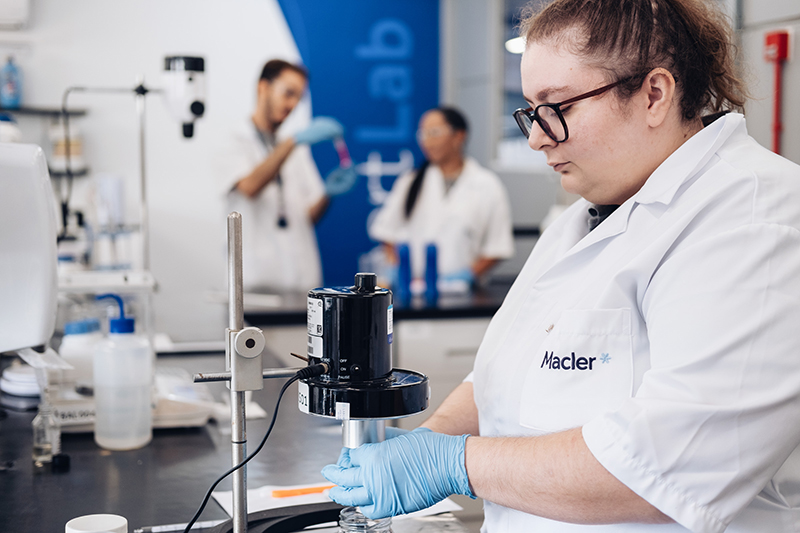
Count on SmartLab to help you choose the right excipient for your formulation
Choosing the ideal excipient for each formulation requires practical experience and technical knowledge. Macler’s SmartLab will assist you in your research and development journey, helping you maximize your formulation’s performance.
Learn More
Understand what HLB is used for and how it helps you choose the ideal surfactant to create more stable emulsions.
The quality of the formulation depends on the raw materials, and minor variations can lead to losses. With this in mind, Macler developed TrustScan, a proprietary evaluation methodology. Through it, we ensure reliable and safe final products.
Isogen QUALI, a Macler solution developed as a technological alternative to simplify detergent formulations, acting as a single base capable of replacing multiple surfactants simultaneously.
Our chemistry
We use our labs to create
intelligent chemical solutions balanced with your reality.
Products
We use our R&D center, our own laboratory with experienced professionals, to deliver intelligent chemical solutions in balance with your reality.
