
Thaynná LopesGerente de Operações na Macler

Viscosity and density are two fundamental properties of fluids that play crucial roles in various industries, including the cleaning products industry. Although they are related concepts, they differ significantly in their definitions and effects. Read on to learn more.
Viscosity is a measure of the resistance a fluid offers to flow. Imagine a liquid flowing slowly through a pipe. This resistance to flow is what we call viscosity.
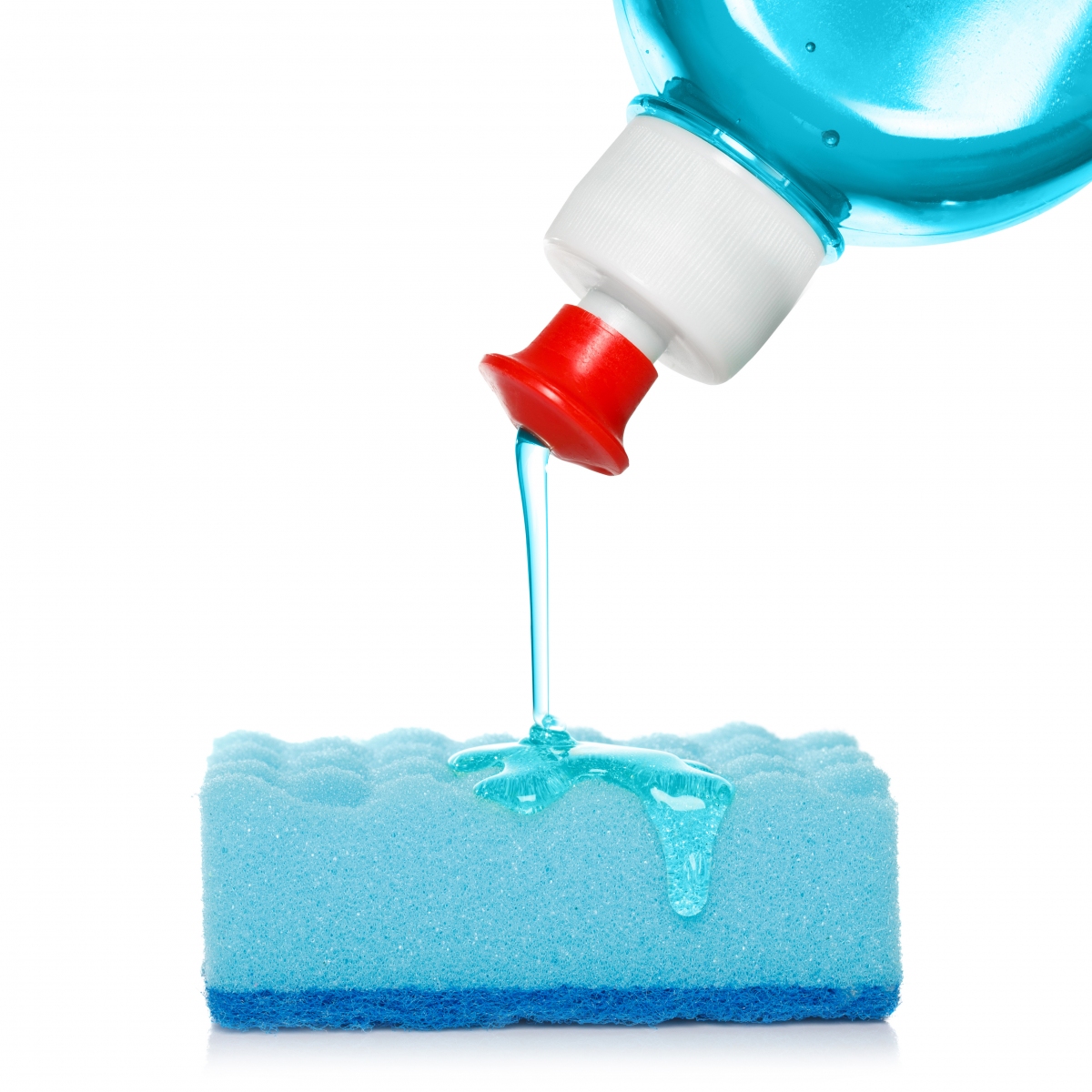
It reveals to us how much a fluid resists deformation, that is, a change in shape when subjected to forces. The more viscous a fluid, the more difficult it is to make it flow. Think of honey, which flows slowly, compared to water, which flows freely.
There are two types of viscosity: dynamic viscosity, also known as absolute viscosity, and kinematic viscosity.
Dynamic viscosity is a measure of the force required to move one layer of fluid relative to another; it is typically measured in centipoise (cP) or mPa·s.
Kinematic viscosity, on the other hand, is the ratio of dynamic viscosity to fluid density, and measures a fluid’s resistance to flow due to the gravitational forces acting on it; it is expressed in units such as cm²/s or cSt in CGS units.
To understand viscosity, it is important to learn more about the different types of fluids, namely Newtonian and non-Newtonian fluids.
Newtonian fluids are those that follow Newton’s Law of Viscosity and have well-defined properties, exhibiting a constant viscosity that does not change with the application of a force; water is a common example, as are laundry detergents and dishwashing liquids when it comes to cleaning products.
Non-Newtonian fluids, however, defy this rule, exhibiting viscosities that vary depending on the force applied. One example of cleaning products with this characteristic is fabric softeners. There are several types of non-Newtonian fluids:
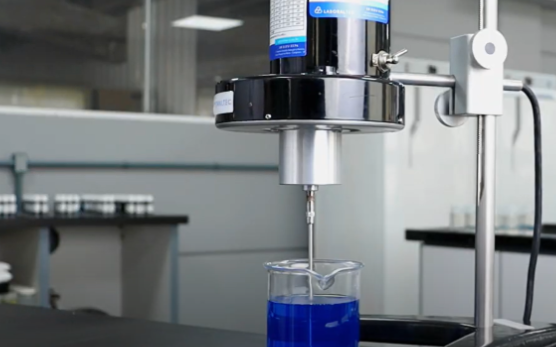
The most common method for measuring dynamic viscosity is using rotational viscometers. These viscometers measure the torque or force required to rotate a probe in a fluid sample. Among these, the Brookfield viscometer is the most commonly used in industrial settings.
To measure kinematic viscosity, it is very common to use a capillary or orifice viscometer, which measures the time it takes for the fluid to flow through a tube. In the sanitary products industry, the most commonly used device is the Ford Cup, in which viscosity is related to the time it takes to empty a cup of known volume that has a calibrated orifice at its base.
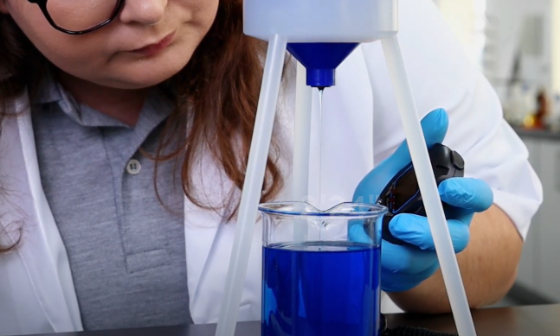
Typically used for Newtonian fluids, the protocols for the test methods are provided by ASTM D 1200. If the material is non-Newtonian, the Ford cup can be used according to the ASTM D 2196 test method.
The cup is available in sets of different sizes, specified by an international standard (ISO 2431). The orifice size is selected for each sample to provide a flow time between 30 and 100 seconds.
Density is the amount of mass of a substance per unit volume. It is a measure of the "compactness" of matter. For example, the density of water is about 1 g/cm³, which means that each cubic centimeter of water has a mass of approximately 1 gram.
Density can be classified as absolute density, which corresponds to mass per unit volume, with the unit of measurement being kilograms per cubic meter (kg/m³), or relative density, which indicates the ratio between the density of a material and the density of a reference material, usually water. It is dimensionless and useful for comparing the densities of different substances.
Density can be measured in various ways. Today, there are hydrometers available for purchase to perform this measurement; these are simple instruments that measure the density of a liquid by observing the buoyancy of a calibrated object.
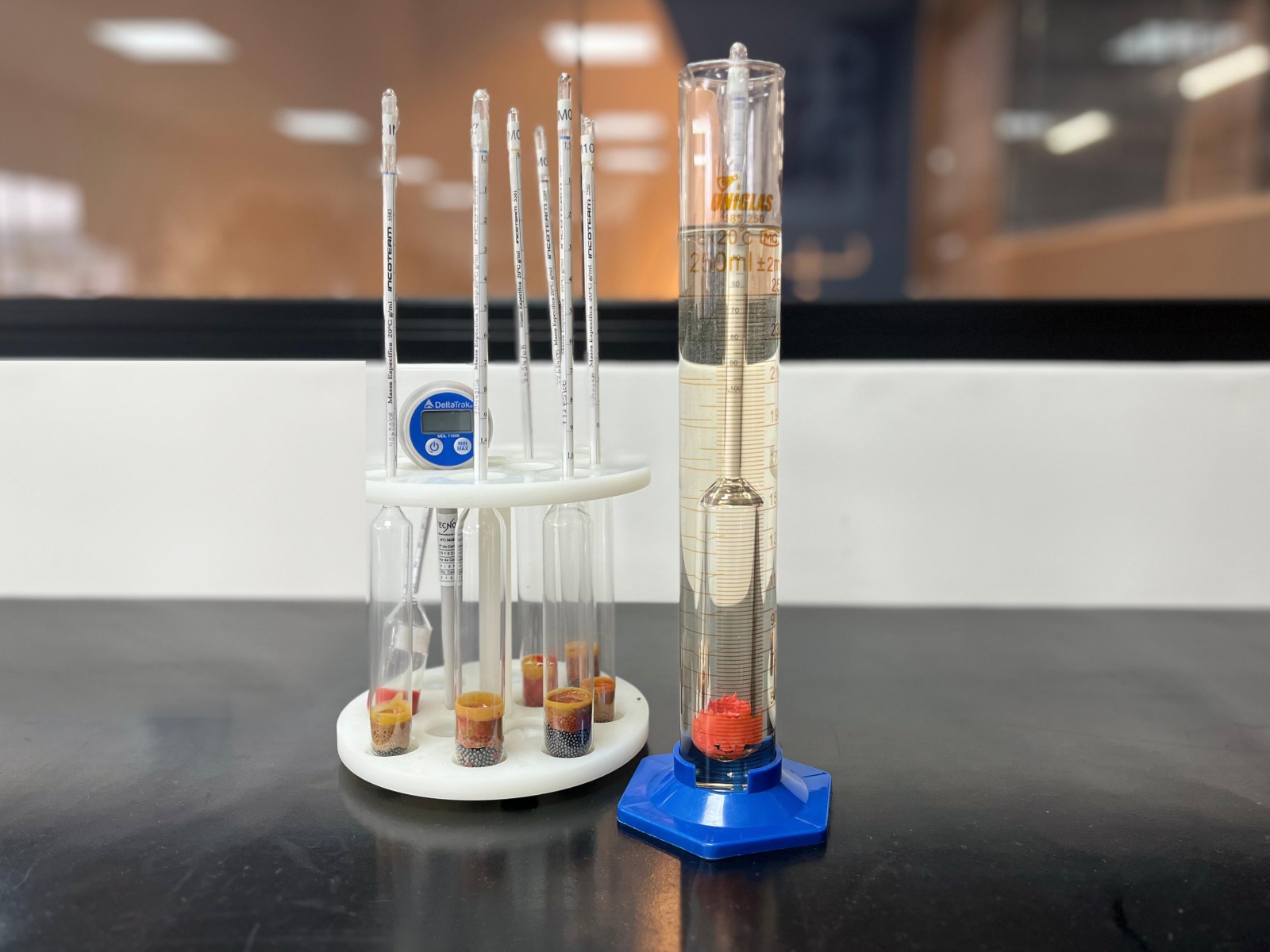
It can also be measured using a hydrostatic balance, which measures the mass of an object in air and when submerged in a fluid, allowing the density to be calculated.

For solid products, however, the recommended method is to use a pycnometer, a glass flask of known volume used to determine the density of liquids and solids.
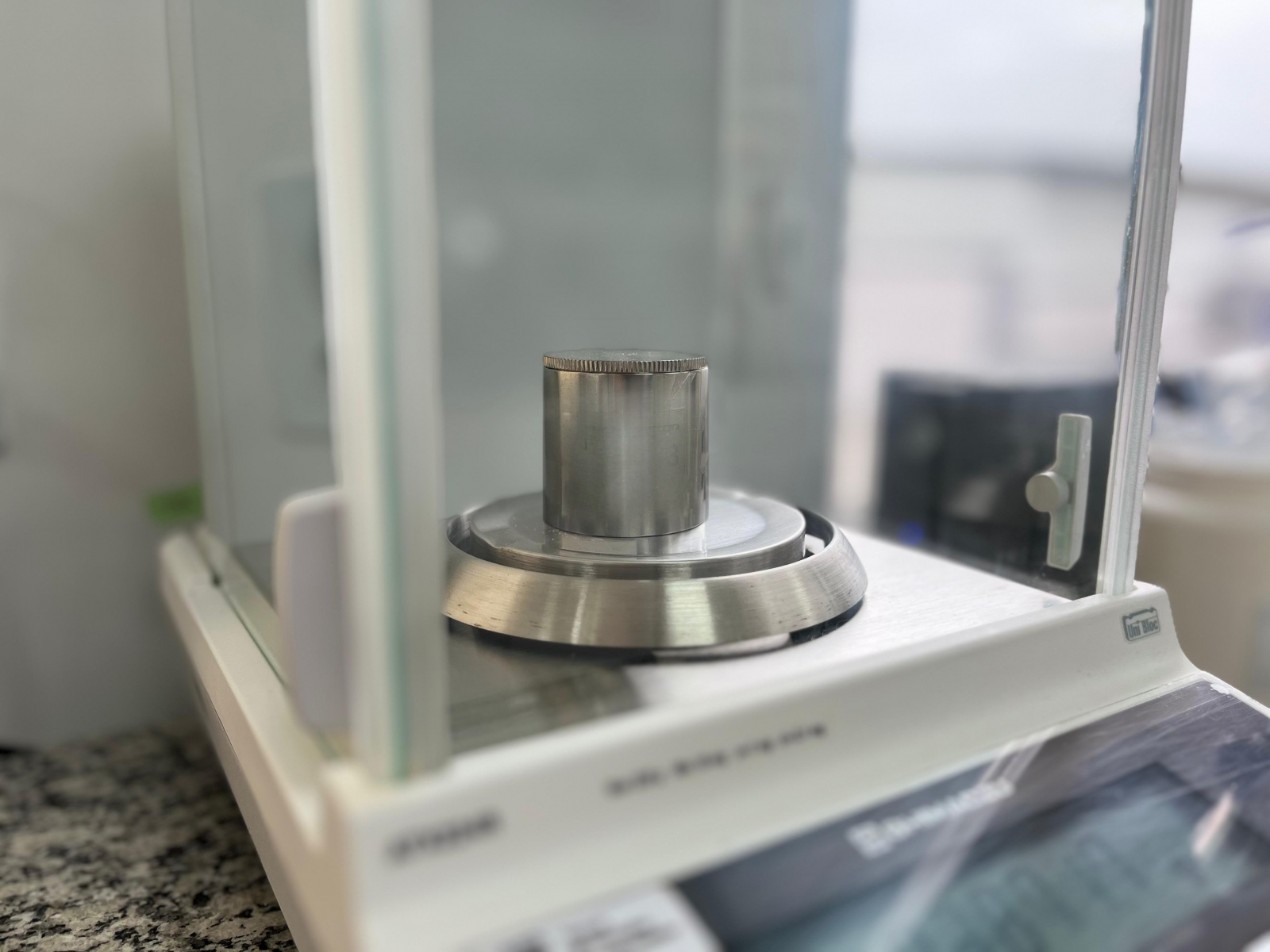
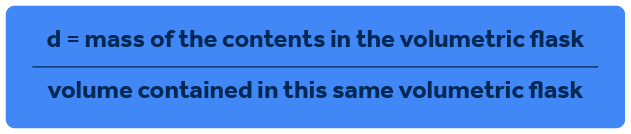
However, one of the simplest ways to determine the density value is by weighing the material to be analyzed in a volumetric flask, calculating the mass-to-volume ratio according to the formula below:
Both viscosity and density can be affected by temperature, pressure, and the presence of other substances.
For example, increasing the temperature of a fluid can decrease its viscosity, making it easier to pump or flow. Similarly, heat causes molecules to move further apart, resulting in fewer molecules in a given volume; in other words, density decreases with increasing temperature. Therefore, it is very important to have a temperature standard for making measurements.
Controlling these parameters is extremely important in the cleaning products industry.
Through density results, for example, it is possible to understand more about the degree of purity of a product. If a substance has been adulterated with a cheaper alternative, the density measurement of the compound material will generally change compared to the pure substance.
Viscosity measurement, on the other hand, is a property that can have different implications depending on what is being analyzed. For example, in a detergent it can help determine shelf life/stability. If not properly monitored, it can modify the application characteristics and even alter consumers' perception of quality, as a product with low viscosity is often associated with a low-quality product.
.jpg)
Monitoring these properties and identifying deviations in supplier approval or in the quality control of raw materials and finished and semi-finished products will prevent a lot of headaches and unnecessary costs.
The SmartLab team monitors these parameters daily and is available to answer your questions and streamline your business operations. Get in touch!
Understand what HLB is used for and how it helps you choose the ideal surfactant to create more stable emulsions.
The quality of the formulation depends on the raw materials, and minor variations can lead to losses. With this in mind, Macler developed TrustScan, a proprietary evaluation methodology. Through it, we ensure reliable and safe final products.
Isogen QUALI, a Macler solution developed as a technological alternative to simplify detergent formulations, acting as a single base capable of replacing multiple surfactants simultaneously.
We use our labs to create
intelligent chemical solutions balanced with your reality.
We use our R&D center, our own laboratory with experienced professionals, to deliver intelligent chemical solutions in balance with your reality.
We use cookies on our site to give you the best experience possible. By continuing to browse the site, you agree to this use. For more information on how we use cookies, see our Privacy Policy.
