
Lucas MicheluzziDiretor Técnico na Macler

Perhaps one of the best-known chemicals used by Brazilian consumers, which has a dramatic influence on culture and behavior with regard to cleaning, is sodium hypochlorite, commonly known as “bleach.”
Whether in the form of bleach or sanitary water, and despite its high toxicity, bleach is widely recognized as one of the most effective cleaning, disinfecting, and bleaching agents.
However, because it is a highly reactive ingredient, it requires a number of precautions regarding its handling and storage. In this article, we will discuss these precautions.
It is important to note that sodium hypochlorite is one of the least stable materials among the cleaning agents used in a sanitation factory, with an average shelf life of only 30 days. This only reinforces the care we must take when handling this input.
Here are some tips that make a difference when dealing with the famous bleach:
Oxidising agents, such as Sodium Hypochlorite, react strongly with metals. For this reason, it is of the utmost importance that equipment such as tanks, agitators, pipework, fillers, and everything that comes into contact with the product during preparation, quality control, and filling is preferably made of plastic. Materials such as carbon steel and stainless steel alloys, including 316 stainless steel, react strongly with sodium hypochlorite, destabilising the product itself and the formulations produced with it.
(2).jpg)
The safest recommendation is to always use plastic equipment made from PP, HDPE, UHMW, Teflon, and other inert plastic materials. It is not recommended to use PET plastic jars for collecting and storing samples. Always use PP or HDPE bottles for this purpose.
Just as we take great care with equipment and pipework, you need to be aware that PET packaging is not advisable for filling alkaline and oxidising products such as Hypochlorite. In this case, try using PP or HDPE packaging. PETG (Polyethylene Terephthalate Modified with Glycol) has been used with a certain frequency, but it is always interesting to test the chemical resistance of this type of material and request a guarantee from the manufacturer, as there are different types of specification for this family of plastics.
.png)
A top tip, which goes beyond the material of the packaging, is to pay attention to how these containers are stored. The containers and lids need to be protected from dust in some way. They are usually packed in tightly sealed plastic bags, with the bundles stacked in such a way as to leave the mouths of the jars facing downwards, creating even greater security so that nothing accumulates inside the jar. Any accumulation of dust inside the packaging will trigger reactions with the bleach. This is often a factor that is overlooked when investigating the problem of puffiness in packaging.
Another fundamental factor is water. Water in Brazil tends to have high levels of iron. Iron is a contaminant that reacts very strongly with bleach, and this is often the factor that triggers instability in the formulation.
If there is iron present in the water available at your plant for the production of hypochlorite-based products, the water should undergo a minimum purification treatment using equipment called a softener. This type of equipment can remove iron and other contaminants and significantly increase the quality of the water. In addition to peroxide, iron also reacts with and destabilises dyes and preservatives in cleaning formulations in general. In other words, it's a very important topic to investigate in the cleaning products industry.
.png)
Furthermore, we must also pay attention to the presence of organic material in the water, such as sludge, for example. These materials also strongly impair the stability of hypochlorite. Therefore, the water must undergo filtration to remove this type of impurity. Additionally, organic matter can also come from handling, contaminated containers, sweat, hair, and dust.
Always remember: Water is the most important raw material in the hygiene and cleaning industry, and therefore needs special attention to avoid headaches.
It is very important to realise that Hypochlorite is only stable at alkaline pH. For this reason, Sodium Hypochlorite or other Hypochlorite salts are always supplied with a considerable residual alkalinity. In the case of Sodium Hypochlorite, which is the most commonly used for cleaning products in general, a considerable residual of Sodium Hydroxide (caustic soda) is added so that it is possible to maintain the active level at a minimum of 10% over 30 days.
It is very common for formulators to want chlorinated formulations with a pH below 11, as this would simplify the process of registering some types of formulations with ANVISA. However, this pH is highly contraindicated as it quickly destabilises Sodium Hypochlorite, which requires a caustic environment with a pH above 13.
It is very common, when developing certain types of chlorinated formulations, mainly chlorinated detergents, to search for surfactants, adjuvants, and thickeners that are compatible with sodium hypochlorite. However, there are very few options for ingredients that are stable to bleach.
Starting with surfactants, the most commonly used in this type of formulation are Amine Oxides. This class of surfactant, in addition to being a rare stable alternative to bleach, offers excellent detergency, good foam formation, and some of them can add viscosity to formulations rich in causticity.
These same characteristics can also be found in the product Isogen DAC 210, developed by Macler. However, Isogen DAC 210 offers even more advantages. In addition to its surfactant power with high detergency, foaming, and thickening properties, it is capable of replacing adjuvants such as tripolyphosphates, carbonates, and silicates. This becomes even more advantageous for formulation stability when we realize that all these adjuvants and salts, in general, contain a lot of ferrous contamination. Iron is one of the main culprits for compromising bleach stability, as previously mentioned.
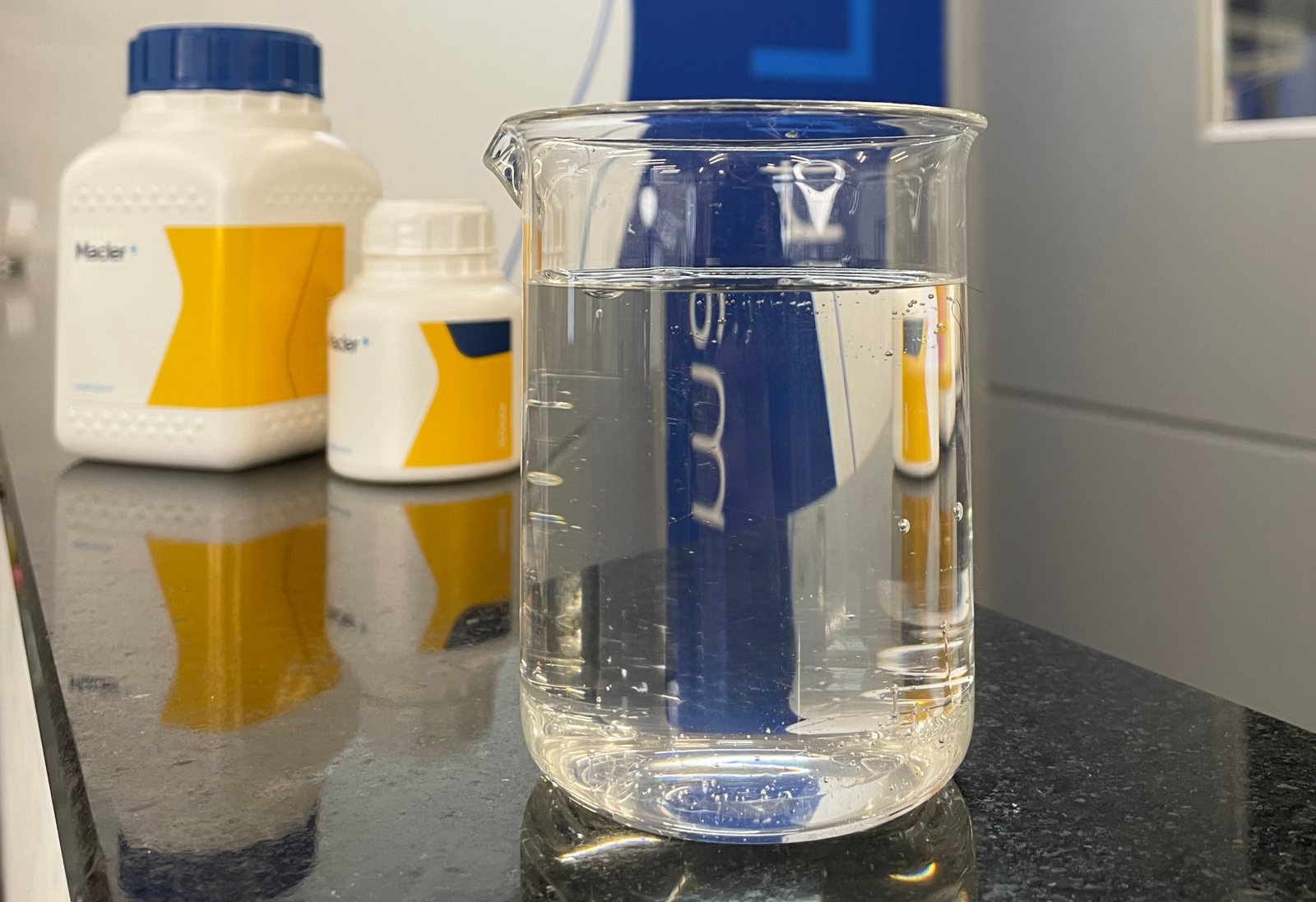
The aggravating factor in the case of water and ingredients contaminated with iron is that we have no options for bleach-stable sequestrants to help protect the formulation. Neither EDTA, nor phosphonic derivatives, nor gluconic derivatives are stable in this type of formulation.
Another ingredient that has drawn attention in chlorinated formulations is fragrance. Not many fragrances remain stable under such conditions, and therefore stability testing of this ingredient during the product development phase is fundamental. In general, more floral fragrances show greater resistance, but this relationship is not direct; that is, just because a fragrance is floral does not mean it will be stable with bleach. It is always necessary to test the stability to ensure that the fragrance is suitable.
And pay attention!
This is one of the most complicated issues. Few suppliers are guaranteeing good quality, and most sodium hypochlorite manufactured in Brazil is supplied already contaminated with iron, either from the water used in manufacturing or from the use of metal pumps in loading and unloading tanks.
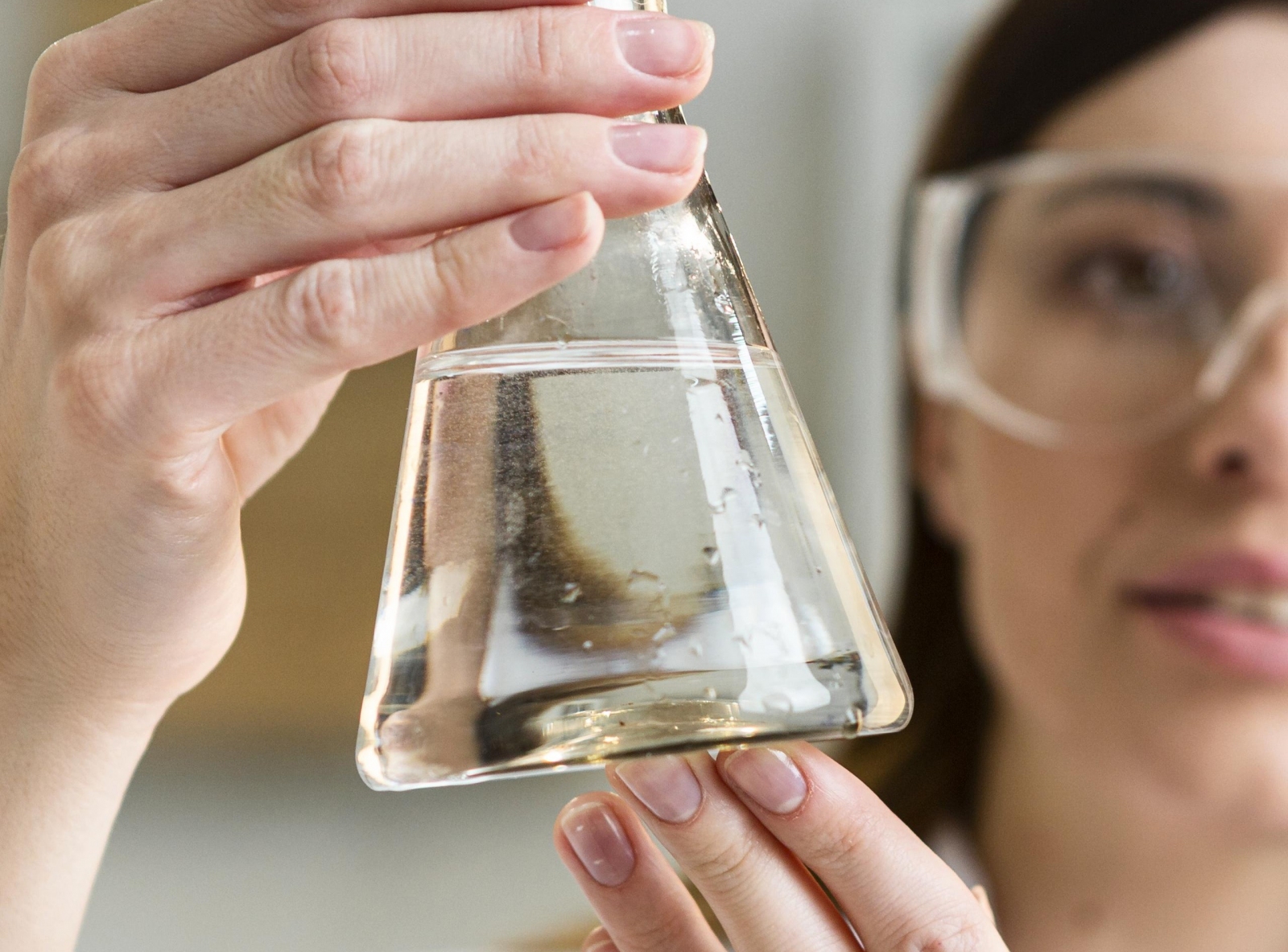
It's easy to see if sodium hypochlorite is contaminated, as iron in an alkaline environment forms iron hydroxide, a "brick-red" compound. To observe this compound formed by the presence of iron, the sodium hypochlorite must be left to stand for a few hours or even a few days. If the product shows a reddish "powder" stuck to the walls, the bottom of the container, or even the surface of the liquid, it indicates ferrous contamination, and the likelihood of problems with the formulation is high.
Bleach may not suffer as much since it typically contains a lower range of active bleach (2.0 to 2.5% active bleach) and does not contain large quantities of other ingredients. However, formulations of chlorinated alkaline detergents are generally very high in active bleach and sodium hydroxide, which reduces the availability of water in the formulation, increasing its concentration and consequently its reactivity, making the formulation much more sensitive and susceptible to destabilization and unwanted reactions.
It is not uncommon for manufacturers of chlorinated alkaline detergents to have difficulty stabilizing their formulations for more than 2 or 3 months. The secret to greater durability is simple: adequate raw materials, quality water, correct equipment, trained operators, and a balanced formulation.
Macler develops technical articles, tests, and formulations to support the industry in creating more efficient and stable products. Click below to learn about an excellent option for Chlorinated Alkaline Detergent developed by Macler's SmartLab:
When the temperature changes, turbidity, phase separation, crystal formation, or changes in viscosity may occur. Two parameters are critical in this analysis: the fog point and the cloud point.
This article will discuss best practices for peroxide-based formulations and tips for developing a high-performance, cost-competitive, and highly stable product.
We use our labs to create
intelligent chemical solutions balanced with your reality.
We use our R&D center, our own laboratory with experienced professionals, to deliver intelligent chemical solutions in balance with your reality.
We use cookies on our site to give you the best experience possible. By continuing to browse the site, you agree to this use. For more information on how we use cookies, see our Privacy Policy.